
Exploring How Chris Greenacre Has Revived The Wellington Phoenix
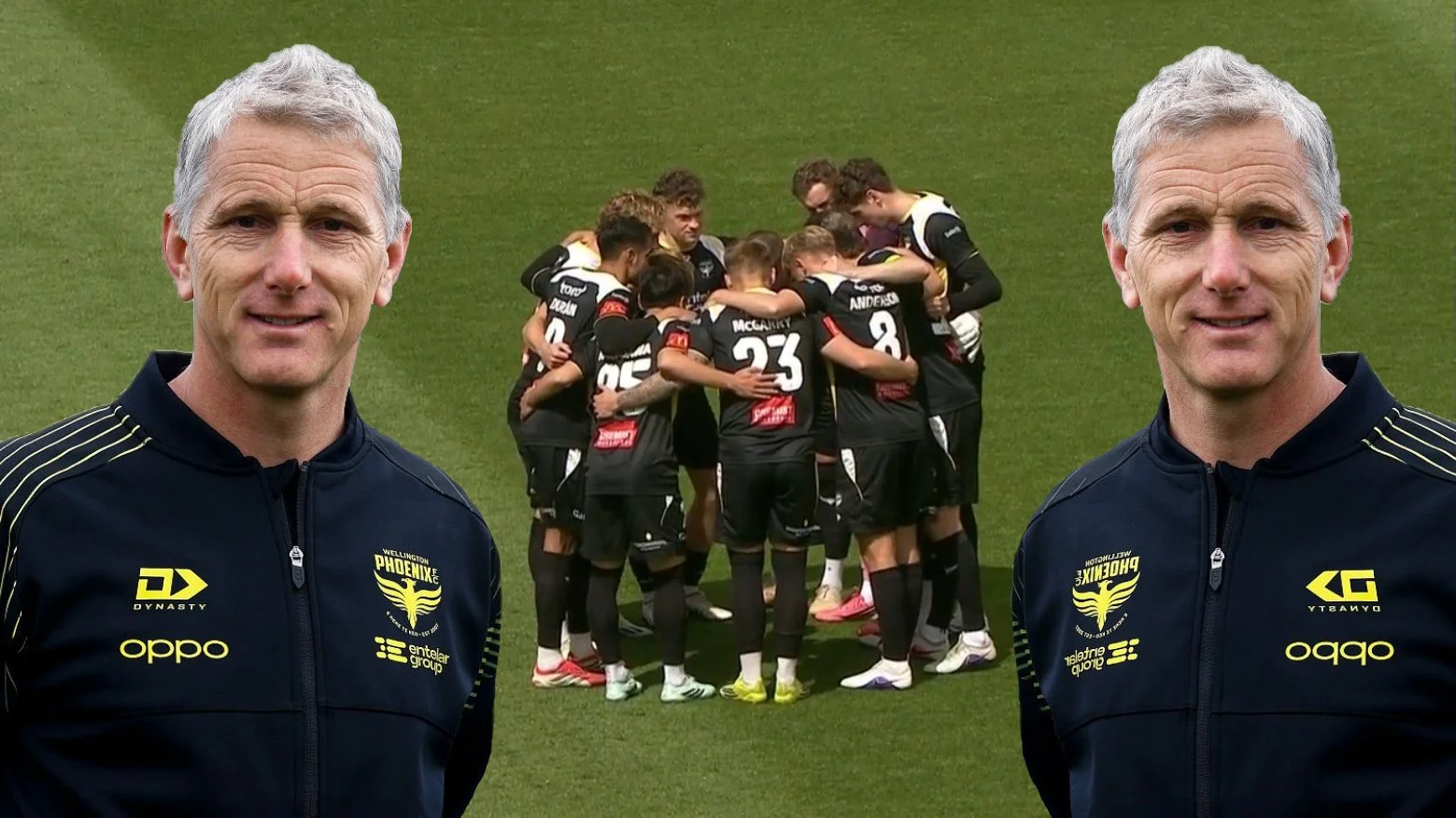
Be honest: who thought the Wellington Phoenix lads were going to be in for a stinker of a season? Yeah, same here... yet we’re three rounds deep and the Phoenix are three for three, sitting top of the table ahead of the derby against Auckland on Saturday. Of course if they lose that game then it could be like a house of cards tumbling down – their six previous derby defeats each tangibly damaged the team’s confidence and trajectory and a seventh, just as hope was beginning to sprout again, would surely do the same. Last season they didn’t only lose all three derbies, they also lost the games immediately afterwards too as the negativity festered.
But they’ve never been in a better situation heading into one of those AFC meetings than they are right now. In fact, they’ve never had a better start to a season fullstop. The 2-1 comeback win against Melbourne Victory and 2-0 victory against Central Coast gave the Nix back to back wins to begin an A-League season for the first time in their 20-year history... and they’ve since added a third by beating Newcastle 3-0 in a smash-and-grab across the ditch.
There were plenty of reasons to be sceptical about this team. Their offseason recruitment had left much to be desired with their fifth visa spot unused and unglamorous or unproven foreign additions made elsewhere. Rafael Durán signed from Macarthur where he was playing a different position to how the Nix are using him, Max Anderson was picked up from England’s fourth tier where he’d fallen out of favour at Crawley Town, and Bryce Duke arrived as a fringe MLS player who’d played for four different teams in his five and a half years in that competition. Their local recruits were all dudes returning academy graduates and homegrown youngsters were going to have to cover most of the squad depth. And it’s not as though this team had much to build upon from last season.
Nor had Chris Greenacre done much to inspire much faith in his coaching prowess. It’s always a frisky one when interim coaches get promoted to permanent roles because the job descriptions are not the same. An interim is dealing with somebody else’s squad whereas a permanent coach needs to construct their own. Greeny is a very popular figure, a man who cares deeply about this club and is desperate to impart that to his players, and he did oversee an uptick during his eight games late last term. Particularly defensively. But there were plenty of red flags:
The fact that it took him until his third game to ditch the wingback formation that had gotten so stale.
The fact that he continued to select a bulk of players with expiring contracts rather than building towards the future, even after their finals hopes had been dashed.
The fact that he only won four of those eight games and finished with an embarrassing 4-0 loss away to Macarthur.
The fact that most of their goals over that spell came from set pieces, that they weren’t really creating much at all from open play.
And if we’re being completely real here, it’s not like Greenacre was ever a particularly winning coach with the Nix Reserves, nor did he guide the NZ U20s team into the knockouts of their World Cup in 2025 – breaking a four-tournament run of that team getting out of the group stage (three times coached by tactical extraordinaire Darren Bazeley and once by his Greenacre’s old interim coaching comrade Des Buckingham).
Yet here we are and Chris Greenacre’s Wellington Phoenix have been superb. They’re playing rugged and committed footy, very solid at the back, but with a variety of creative outlets. Goals are flowing. Corban Piper is the current Golden Boot leader, prompting an All Whites call-up. The level (and consistency) of goalkeeping has gone soared with Henry Gray back there, who has already kept two clean sheets. There have been individual improvements across the board. The new signings have fitted in from the get-go. Everyone seems to be pulling in the same direction. Still early days and, again, the derby might shake things up... but let’s unpack what we’ve seen over these initial three weeks.
The Value of a Cohesive Vision
The Phoenix may not have signed big names or exciting resumes this season but what they did do was they signed profiles. Chris Greenacre knew what kinds of players he wanted and the club went out and found fellas who fit those moulds, his recruitment was all about cohesion and compatibility. Greeny likes a 4-2-2-2 formation, has done since he was coaching the Reserves back during the Ufuk Talay days, and that comes with certain requirements. For example, the fullbacks have got to be able to play in both directions since they’re the ones holding the width. The Nix had that with Tim Payne last season but he’s gone... so in comes James McGarry. Matt Sheridan steps up to fill Payne’s boots while McGarry ensures they’ve still got a high-calibre international on the other edge to ease that burden. And Walter Scott provides veteran cover on both flanks.
Being able to retain Alex Rufer was a massive positive from their offseason, ensuring his leadership and defensive shielding remained on the pitch. Okay but what kind of player do you put next to him? Ideally it’d be a guy like Max Anderson who also loves to rip into tackles but will roam further and get the ball rolling in possession more efficiently than Rufer, who is more of a settling presence on the ball. Rufer’s better in the air and has more range to his passing. Ando is better at connecting on those short and medium passes and has the legs to get up in support. They share some key strengths and they cover each other’s weaknesses like a good midfield combination ought to.
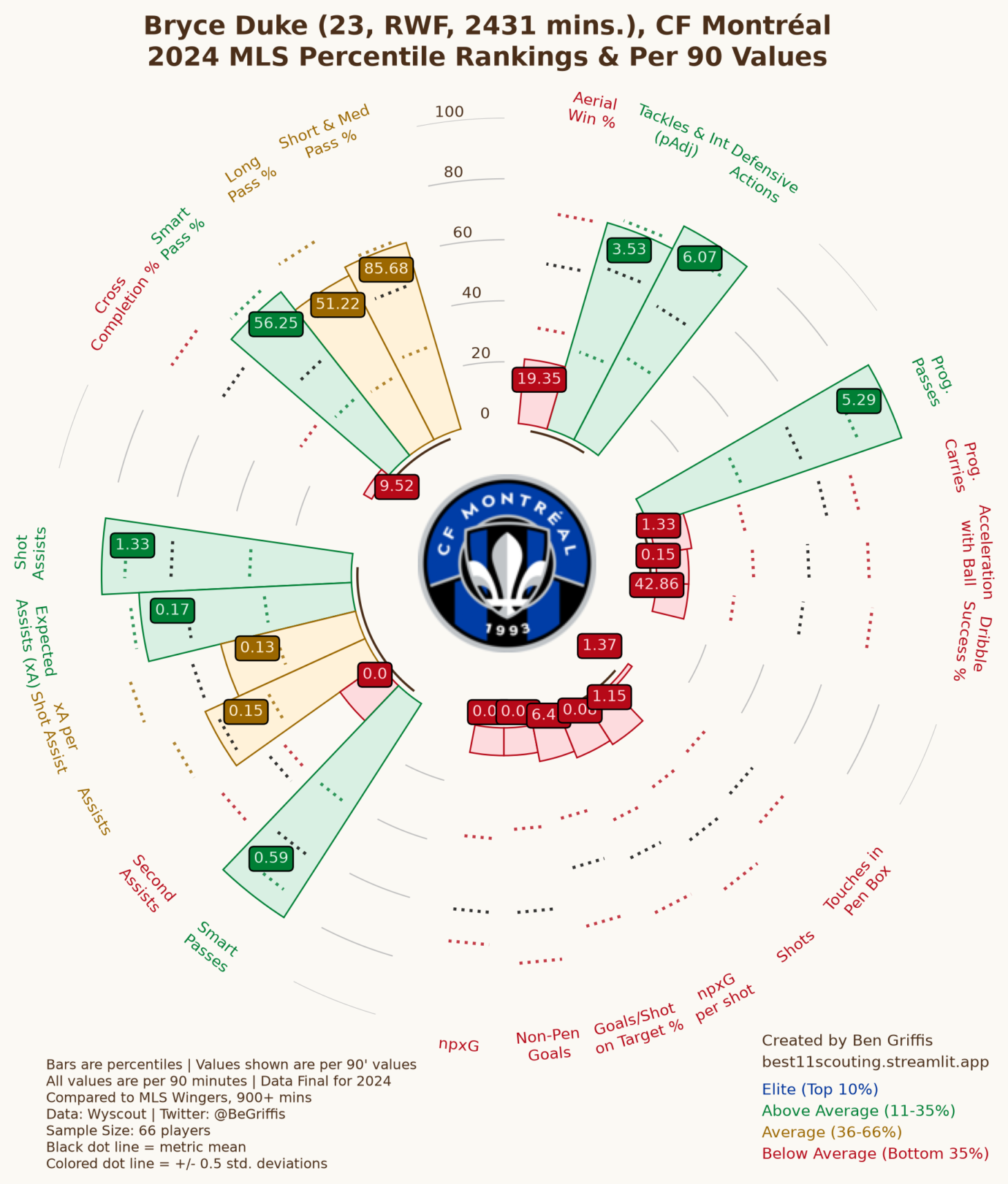
Kazuki Nagasawa is one of the most underrated players in the entire A-League and has been from the moment he touched down in Wellington. He showed in the opening game how good he can be in that deeper midfield role but Greenacre made it clear last season he prefers him in the opponent’s half where he can bring that guile and creativity to the shindig. In a team with a fairly rudimentary approach, it’s imperative to have a few architects out there. Nagasawa is one of those (currently leading the ALM for assists with four from three matches)... and Bryce Duke is another. Look at the stats from Duke’s best season in Major League Soccer and you can see a bloke who doesn’t have much of a goal threat but his eye for a pass, especially in the final third where things get condensed, is fantastic. He’s a hard worker who makes intelligent decisions and is particularly good at threading that final ball into the path of a running forward... like Rafael Durán. Or Nathan Walker. Or, frankly, Corban Piper seeing as how he can do everything all of a sudden.
There was never any reason to despair over all those free agent departures. All that change is what has allowed Chris Greenacre to massage the squad into something that better fits his image of this football team. They got fantastic fees back for Luke Brooke-Smith and Tim Payne and were never going to be able to retain Sarpreet Singh after his loan, who was only in town to stay match fit for the World Cup (mission not accomplished, sadly). But let’s be honest, other than those three, everyone else who has left has either been improved upon or else a more compatible player was signed instead.
Ifeanyi Eze was one of the most thrilling Nix imports forwards we’ve seen... but he can’t have been easy to play alongside. You never knew what he was going to do next and he didn’t pass the ball very often (8.73 successful passes per 90 mins last season... ranking in the bottom 10% of A-League forwards). It’s doubtful that Rafa Durán will prove to be a superior player but it’s very possible that the team will be stronger with him in that position instead. Less reliant on one man. Much more of a collective approach – something that Greenacre’s been emphasising hard since he stepped into this role. All you really need to know about the dudes they lost is that not a single one of them signed with another A-League club. Absolutely nothing to lose sleep over there.
Specialist Roles & Individual Improvements
Nevertheless, the squad did look extremely light heading into the season, with only four imports on board and 12/20 senior contracts held by former academy players, many of them unproven in the A-League. Based on last season’s reputations this was not a squad to be enthusiastic about. However, as a wise man once said, the thing about the old days is that they’re the old days.
It just so happens that Corban Piper is not the same player he was last season. He’s worked extremely hard over the intervening months, no doubt helped by having a former striker as his mentor and head coach, and has returned a far more well-rounded centre forward. We knew he could win headers and rough blokes up. What he hadn’t proven was that he could also make clever runs in behind, that he could hold the ball up for teammates, that he could press effectively as part of a unit, and all those specialised elements. He’s made amazing improvements over a short space of time and, by his own admission, what did it was getting to focus on one specific position and really dig deep on what it takes.
Piper was a barnstorming attacking midfielder at Birkenhead United when he first got his name known. He then spent a year playing for Wexford in Ireland where they used him more as a defensive midfielder before picking up where he left off with Birko. The Wellington Phoenix signed him with the intention of turning him into a centre-back for Giancarlo Italiano’s back three, utilising his midfielder’s passing range and his strength in the air, and it’s telling that the Aussie pundits all think he’s a natural defender because that’s where they checked in on his journey. But after a few reserves games focusing on that CB transformation, when he got to the A-League he was used as a utility instead – sometimes centre-back, sometimes midfield, sometimes right-back, and then eventually as a striker. Lots going on there for him (especially in a Chiefy system). But Chris Greenacre has simplified things for him. All energy directed towards learning one position. And given Piper’s reputation for doing the extra yards in training, the payoff has been rapid.
He’s not the only one either. Matt Sheridan had an assist in each of the first two games having never had an ALM goal contribution prior to that. Sheridan, like Piper, was a guy that the previous coach loved for his versatility and that’s helped him carve out a space in this competition... but to get to the next level he needed to zone in on one position and really figure it out. Sheridan was also a midfielder originally. Moved to right-back in the Nix Ressies (under Greenacre) but often played CB in the A-League. Now that he’s been able to focus on being Tim Payne’s replacement at right-back we’re suddenly seeing him make decisions like a right-back should. He’s not playing conservatively, he’s not consolidating possession in good areas like he often did last term. He’s taking his man on. He’s direct with his movements, he’s economic with touches. He’s bringing the byline into play... and he’s whipping in some absolutely delicious crosses. He was already a solid defender in that position, now he’s gone from a negligible attacking presence to an excellent one just like that.
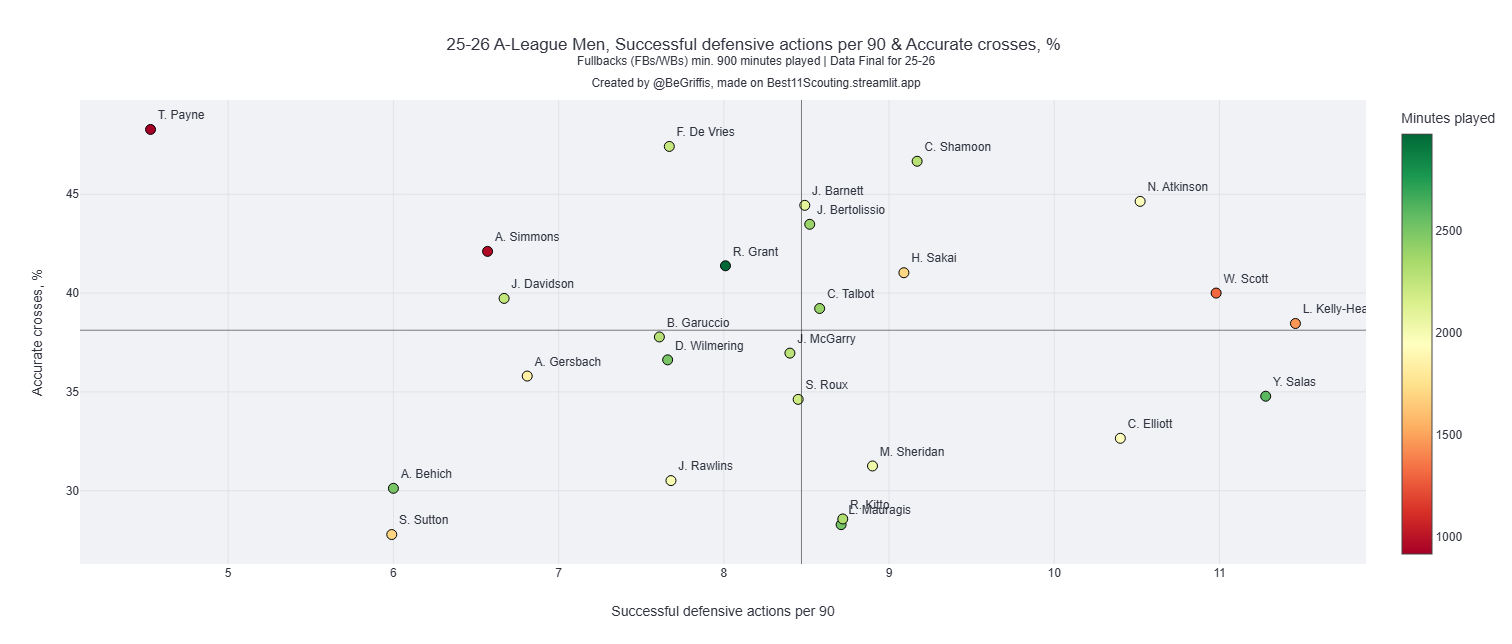
Lukas Kelly-Heald doesn’t have the burst to play fullback in a Greenacre system so he gets to specialise as a central defender and while he did have a couple of wobbles in the home games, the match against Newcastle Jets was as good as he’s ever been in that position. Guys like Nathan Walker and Riley Bidois have shown growth coming off the bench, each already amongst the goals. Luke Mitchell unexpectedly debuted in week one and was really tidy. It’s not just the young blokes either because Bill Tuiloma has had a full preseason to get himself back into prime condition and could easily be on track for a monster campaign. Internal improvements are every bit as valuable as external additions.
The Interim Coach vs The Head Coach
It’s a common trend in football that when one coaching tenure goes awry and ways get parted... an interim coach arrives with the short-term task of doing the proverbial laundry and washing the proverbial dishes and getting the proverbial house back in order. Often that requires a bit of a reset, simplifying the approach and trying to restore confidence to the playing group. You don’t have time to make any drastic changes and you’ve gotta work with an inherited squad. Yet those small measures can often have quite an impact and, if the results are good enough, a secondary trend is that the interim often then gets hired on a permanent basis.
Therein lies a conundrum because the job of an interim coach is quite different to the job of a permanent coach. And the things that worked for the interim bossman very often fall to pieces when the more expansive job description of a permanent coach begins. A coach who succeeded in adapting an existing squad may prove unable to build one of their own. That coach inevitably gets fired and the cycle starts all over again.
Chris Greenacre got the permanent job on the back of a three-game winning streak as interim coach... but we’ve already been through the reasons why he wasn’t particularly inspiring as an interim. But maybe that was the secret sauce? Good interims may not often translate into good permanent coaches, however what we’ve got here is the example of an underwhelming interim who seems like could be a wonderful permanent coach.
Things were complicated under Giancarlo Italiano. His tactical tenure is probably remembered for the infamous high defensive line but Chiefy quite drastically changed the team’s style of play in each of his three seasons. They were a high-line defence one year. They were a low-block defence another year. He didn’t keep a stable approach and he didn’t like talking about formations either because, in his mind, a football team occupies dozens of formations throughout a game depending on where the ball is and who’s got it.
That’s no less true under Greenacre but the mindset is telling because Chiefy gave out lots of instructions whereas Greenacre’s method is all about simplicity. There were definitely a few sliding doors moments where the Chiefy Era might have turned out very differently... but once things go awry it’s hard to pick a team up off the ground while overloading them with information. The Nix, at this point in time, need a coach who can strip it all back to the essentials like Greenacre is doing. Clear and direct. The football isn’t especially modern or exciting and it’s certainly not blazing any trails. But this is the A-League where consistency and solidity tend to win you a whole lot more games than the high concept stuff.
The Conveniences
This is the part where we’ve gotta mention how those first two wins, the source of the momentum without which they probably wouldn’t have done what they did in Newcastle, did arrive from convenient home fixtures. Melbourne Victory were undertaking their third game in the space of eight days in that week one clash, having gone to extra time and penalties in the Australia Cup defeat against South Melbourne before hosting an Asian Champions League 2 game in the midweek and then travelling to Wellywood. The Central Coast team that they beat in week two spent much of the offseason struggling to stay afloat before confirming new ownership in July... and even with that investment they’ve still ended up with an extremely young squad.
As for the Newcastle Jets, well, they’re unlikely to be the Box Office Jets of last season after losing a few key players. Still playing some lovely footy but lacking all cutting edge at the moment – and all three of the goals they conceded against the Nix were pretty embarrassing as their high line kept getting staggered and breached. Nor could it be claimed that Wellington were ever in full control, despite leading most of the way. They barely touched the ball in the second half and the two clinching goals came very late. Loved the heart, loved the determination from the Phoenix there... but that game could easily have gone the same way as the Auckland FC match the night before where the Black Knights conceded an equaliser right at the death away to Brisbane Roar after sitting on a 1-0 lead throughout the second half.
Plus if there was ever going to be a season where skimping on a fifth visa player and relying excessively on the developments of homegrown players was going to work, this is the one. Central funding has been slashed and everyone’s broke. Lots of teams are either keeping that last visa spot open or are jumping on a cheapo option instead – Auckland FC have done both, with Daniel Normann signed as an import out of their Pro League team and a fifth spot still open. Perth Glory picked up kiwi Matt Ellis from the Pro League/NZ National League as another such example... a brilliant decision considering he’s scored in both his first two substitute appearances. There had already been a league-wide trend towards youth development (and the logical next step: player sales) since the covid bubble seasons. It would not be unfair to say that the overall standard of the league has dipped as a consequence, albeit whilst hopefully making it more sustainable.
It’s only been three games and nothing that’s been achieved yet will compare to the next test when we see how this side handles the derby. The defeats against Auckland FC were what shattered the team’s self-belief over the previous two seasons and ultimately led to the resignation of Giancarlo Italiano as coach. Greenacre never got to face AFC during his interim spell (the number one reason why hiring him off the back of a few interim results felt premature) so in a way everything that’s covered in this article is only preparation for Saturday evening. But, mate, three games deep and Greeny’s got Phoenix fans excited about a derby. That’s already a saintly achievement.
Get on board with TNC’s Patreon, Substack, or Buy Me A Coffee if you appreciate the kiwi sports coverage and want to support what we do
Also helps to whack an ad, share our stuff on socials, and tell your mates about us