
Aotearoa at the 2026 FIFA Women’s U20 World Cup - The Reaction
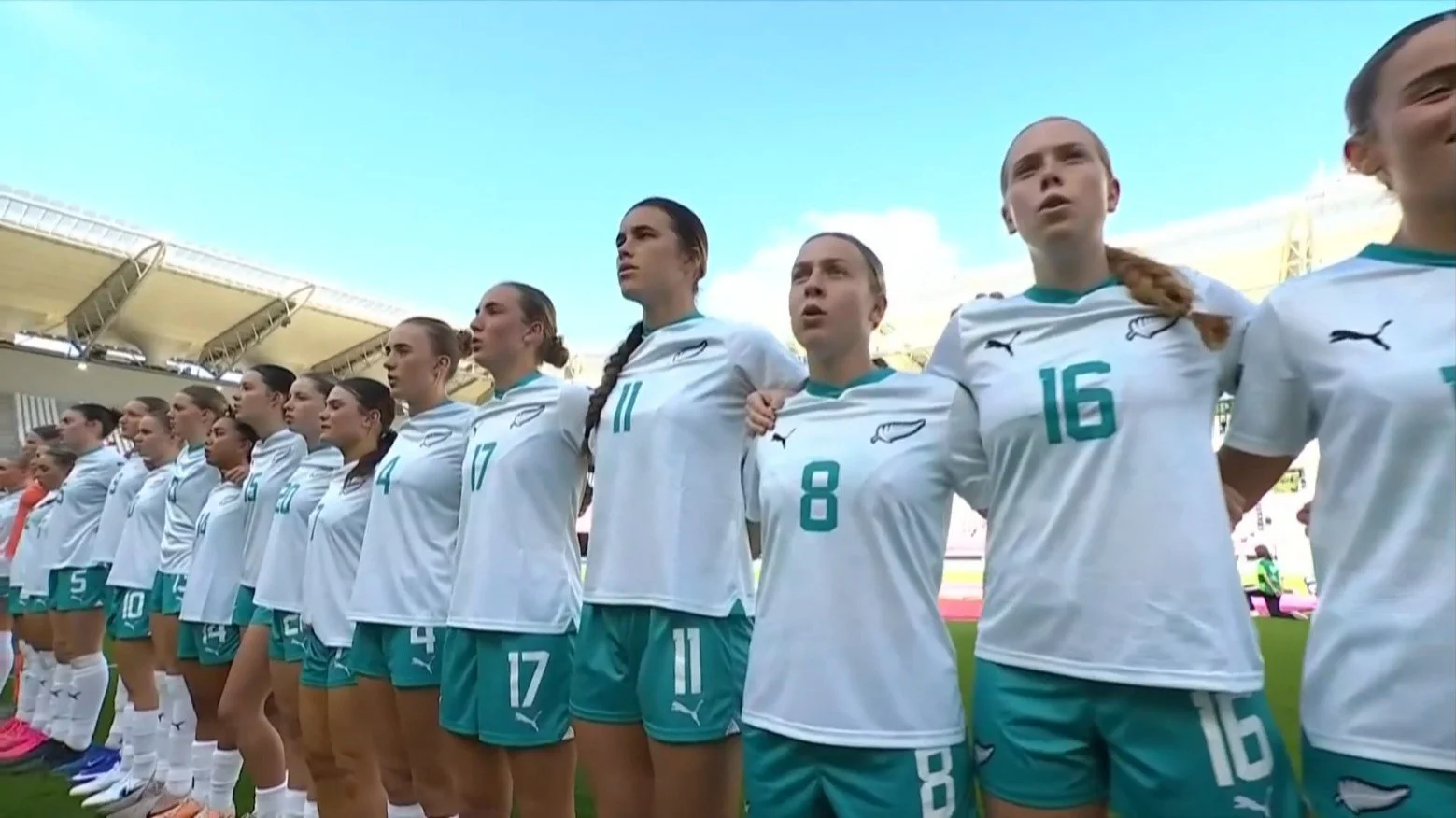
Every FIFA event is a challenge for any New Zealand entrant, no matter how simple our qualification journey may be. Trying to overcome the perennial problem of being a big fish in the confederation and a small fish in the wider world will do that to you. Nevertheless, we work with what we’ve got and these tournaments are always a great stage for the best young players emerging from the kiwi systems to show what they’re up to and get a taster of what they’re aiming towards.
The draw for the 2026 Women’s U20 World Cup could not have been tougher: Japan, Italy, and USA. It would have been a group of death if not for us... and unfortunately this nightmare draw didn’t come at a time of great prosperity either. The Aotearoa Men’s U20s have been bucking the trend for a decade with repeated knockout appearances (albeit zero wins in those knockout games... and they broke the pattern by going out in the group stage last year) but the rest of our age grade teams have been getting slogged lately. Remember when the Women’s U17s came third at their World Cup in 2018? Yeah so it’s been eight years and we haven’t won a game at a Women’s U17 or U20 World Cup since. The 2022 U20s did go pretty well with draws against Mexico and Colombia – that was a squad with the likes of Milly Clegg, Kate Taylor, Grace Wisnewski, and Marisa van der Meer – but the last couple waves have been nasty with some heavy defeats.
Two players in this squad, Zoe Benson and Daisy Brazendale, were part of the 2024 U20s squad which lost 7-0 to Japan, 3-1 to Austria, and 3-1 to Ghana. 13 goals conceded and two scored. That’s the context that this 2026 class arrived with, seeking to put up more of a fight than their predecessors while being lumped in an even tougher group (including the same nation that beat us by seven goals last time). Can’t read too much into results for what are effectively development tournaments – it’s where players end up that counts, not where they happen to be at ages 17-20. Also can’t deny that the results have been sliding backwards though.
The Squad
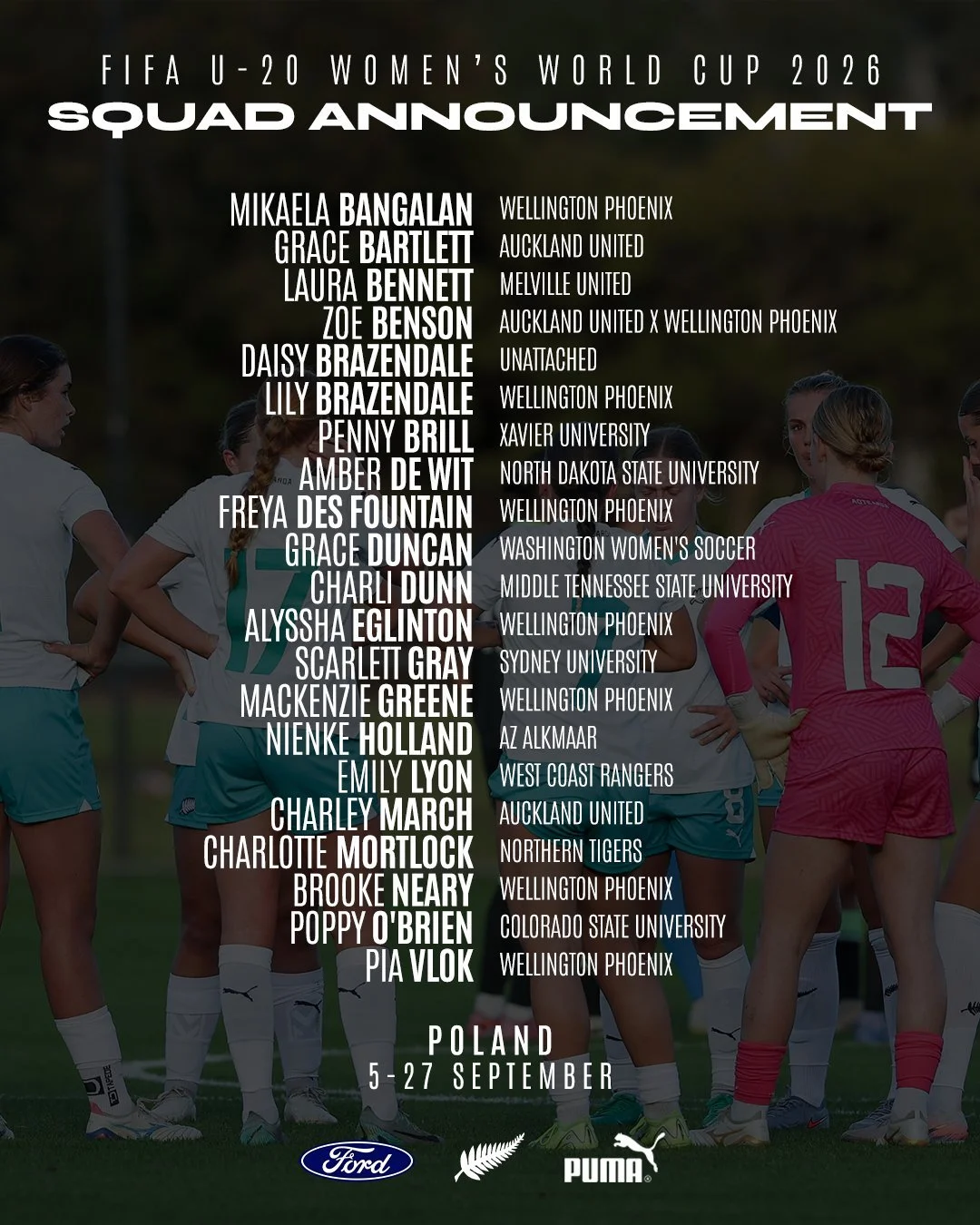
The headline of this selection was that Wellington Phoenix forward Pia Vlok was made available, having captained New Zealand at the previous U17 World Cup. Vlok celebrated her 18th birthday two days before the first game which made her the third-youngest player in this group (Nienke Holland and Laura Bennett being the younger ones). Vlok will still be eligible for the next U20 World Cup in two years... one of seven players for whom that’s the case – Vlok, Bennett, and Holland joined by Freya Des Fountain, Mikaela Bangalan, Grace Duncan, and Charley March in that. All seven of them were at the U17 World Cup in 2025. Very young contingent of the squad there.
Holland is a fascinating case because at 16yo she is about 20 months younger than Laura Bennett (the Melville forward who you may remember from the Auckland FC Invitational game vs Chelsea). Holland is based in, well... Holland, where she’s in the AZ Alkmaar system. She’s been in a couple of U16/U17 squads already (going by the name Nienke Lemmens) and has clearly been pinpointed as someone special to have promoted this quickly, especially as a goalkeeper where physical development is so critical. Brooke Neary was always going to be the number one keeper, that’s why she was included in the last Football Ferns squad so as to give her a wee boost towards this tournament. Could see this as a similar situation for Nienke Holland who’ll surely be starting games at the U17 World Cup in a couple months.
Alongside the seven promoted from the last U17s group, there were 13/21 players here who were part of Oceania qualifying exactly one year earlier. The only player in the squad who didn’t fit into either of those categories was back-up goalkeeper Scarlett Gray, originally from Christchurch though now based in Australia. She was part of the U20s friendly games against Australia in May... along with everyone else in this squad except for Pia Vlok (who was busy with the Wellington Phoenix at the time) and Nienke Holland (who lives in the Netherlands).
Part of the 2025 Oceania Qualifying Campaign
Alyssha Eglinton, Amber De Wit, Brooke Neary, Charli Dunn, Charlotte Mortlock, Daisy Brazendale, Emily Lyon, Grace Bartlett, Lily Brazendale, Mackenzie Greene, Penny Brill, Poppy O’Brien, Zoe Benson
Part of the 2025 U17 World Cup Squad
Pia Vlok, Mikaela Bangalan, Grace Duncan, Charley March, Freya Des Fountain, Laura Benntt, Nienke Holland
Interesting that Nienke Holland was the only dual-national picked from overseas. The only Aussie-based players are those who moved over there recently for football (Mortlock and Gray). They, like everyone else here bar Holland, have come through the NZ Football production line and that includes the five girls at USA universities. A few Aussie dual-nats were tested out during qualifying and in those friendly games against Australia earlier in the year (Lily Joy Taylor, Mary Brown, Phoebe Riley) but none of them made the final cut for Callum Holmes’ squad.
More than half this squad have spent time with the Wellington Phoenix or the Phoenix Academy. Greene, L.Brazendale, Benson, Eglinton, Neary, Des Fountain, Bangalan, and Vlok were all listed with the Nix in the squad announcement; D.Brazendale, O’Brien, Bartlett, and De Wit were previously in the academy but have since left for other things. Not to mention coach Callum Holmes who used to be in charge of that WeeNix team. And it’s through the Phoenix that all of the professional experience in this squad was accrued. Nienke Holland was the only other player affiliated with an overseas professional club and she’s still in the youth ranks. That’s a major difference compared to two years ago when Milly Clegg (Racing Louisville), Emma Pijnenburg (Feyenoord), Kiara Bercelli (Sampdoria), Suya Haering (Turbine Potsdam), Ruby Nathan (Canberra Utd), Olivia Page (Sheffield United), and Lara Colpi (BSC Young Boys) were all at non-Nix professional institutions. Albeit none of them are still at those clubs two years later.
Game Tahi vs Japan
Business began with a pretty encouraging – and controversial – 2-1 defeat against Japan. Encouraging because they’d lost 7-0 against the same opposition in the first game of the 2024 edition and also just generally because of the aforementioned downward trend of results in women’s youth World Cups. So even if the game was overwhelmingly spent with the kiwis sitting deep in defence, to see the effort and application and determination and discipline that this team produced was awesome. Credit to coach Callum Holmes for restoring a bit of grittiness to the equation.
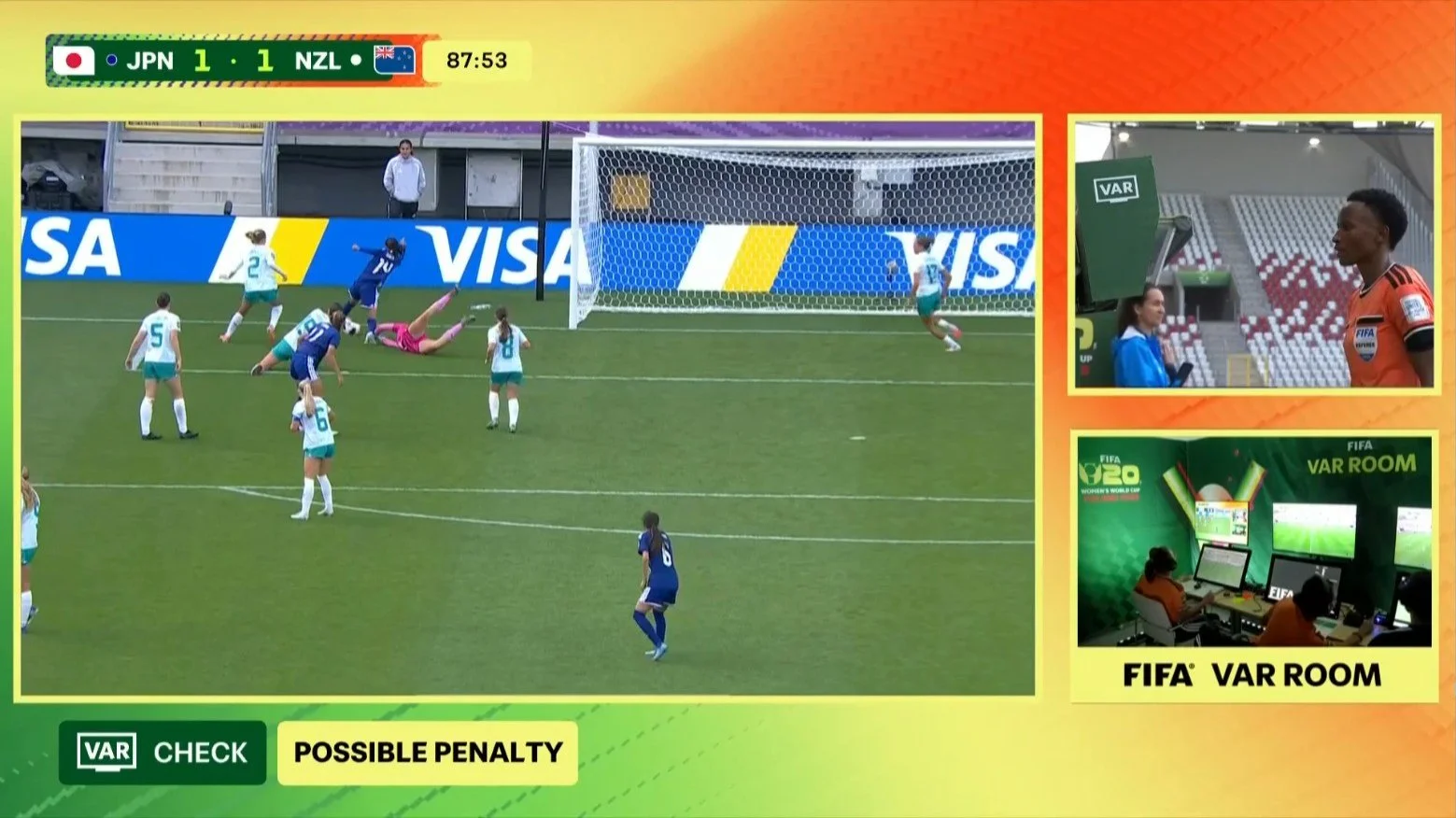
But controversial because, after Pia Vlok set up Lily Brazendale for a 59th min equaliser, it had seemed like the Junior Ferns might just hang on for a backs-to-the-wall draw against all odds. Then goalkeeper Brooke Neary got punished for a very marginal trip against Miharu Shinjo which derailed the entire game due to the VAR intervention. Neary did lift her arm after punching at a loose ball during a momentary scramble in the box. Not a lot of contact, sorta looked like the attacker initiated it, but you can see why it was given. That wasn’t the controversial part.
The controversial part was that it took nearly three minutes of everyone standing around waiting for permission from the ref to restart the game before said referee was finally called over to the screen, then a similar amount of time until the decision was eventually be made. All of which meant that a foul that was committed with 83:55 on the clock became a penalty that was taken with 91:10 on the clock - a wait of 7:15 mins… and then they only played five mins of stoppage time at the end of a half that’d also included three goals and six substitution windows. Doubtful that NZ would have mustered anything if they’d been given the two to three extra minutes they should have been but the lengthy video check stonewalled the flow of the game and spoiled a chance for New Zealand to at least give it a nudge.
So it goes... can’t really argue with the outcome when the stats show that Japan attempted 29 shots (10 on target) compared to 3 shots (1 on target) for the NZers. 15 corner kicks to 0 as well. The penalty was a soft one but Japan could have scored at any number of other moments, like the two times they hit the woodwork (once via a defensive header) or the shot looped over the top shortly before their opener or the many saves made by Neary and the defensive interventions from those in front of her (Alyssha Eglinton had a particularly excellent game at centre-back).
Remember we lost 7-0 to this same opponent at the previous U20 World Cup. Gotta be pragmatic to avoid the same fate – this approach got the Junior Ferns within reach of taking something from the game which few would have predicted beforehand. It also allowed them to lean into the main (maybe only) advantage they had over the Japanese side which was their size/physicality. We do need to be sceptical about the official squad list heights because we’ve learned that NZF have been lying about Alex Paulsen’s height for years on those but it’s all we’ve got to go by and according to that source there were five players in the starting eleven at least 1.74m (Neary, Eglinton, March, Vlok, Lyon) which is taller than anyone in the entire Japanese squad.
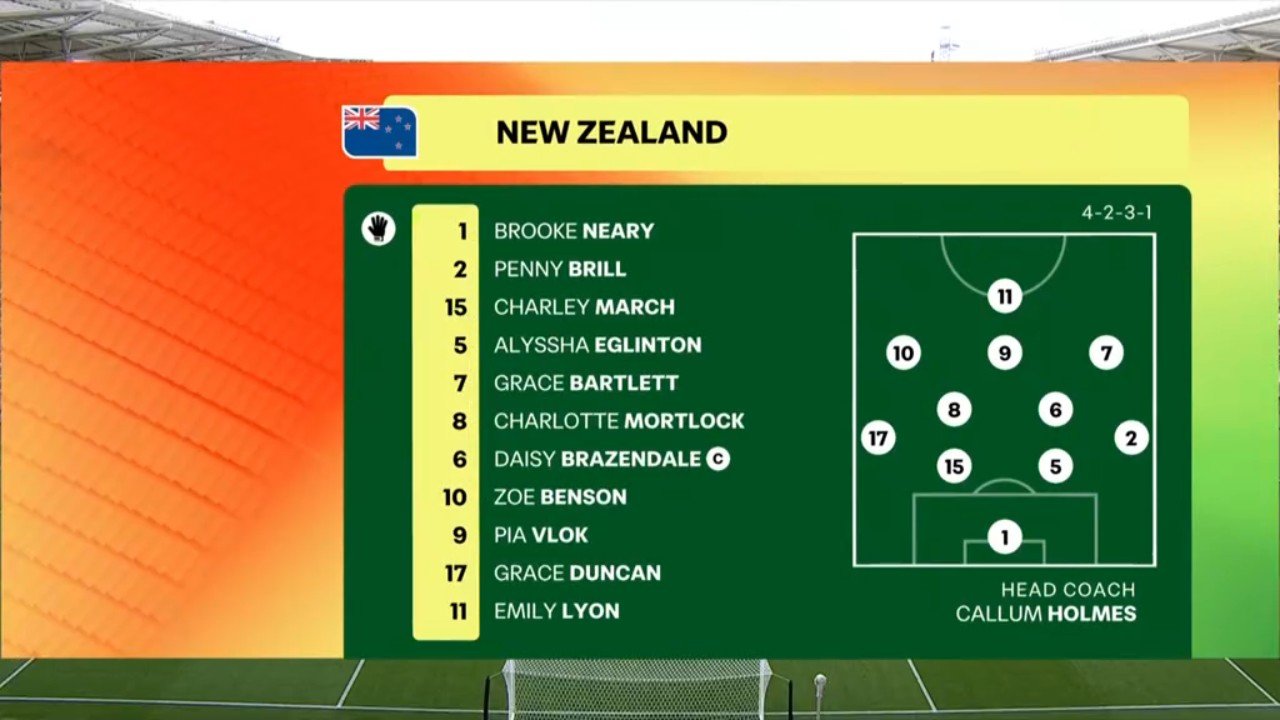
What that looked like was ostensibly a 4-2-3-1 in possession shape… except that they were barely ever in possession so mostly it was the ol’ conventional 4-4-2 OOP with flat and compact lines. Attacking midfielder Pia Vlok defended alongside striker Emily Lyon. Charlotte Mortlock and captain Daisy Brazendale were the central midfielders. Grace Bartlett and Zoe Benson out wide. Slight surprise in the backline with Charley March partnering Alyssha Eglinton in central defence – March usually plays fullback for Auckland United though she’s also the tallest in the team which was surely a factor in that decision. She had a very good game at CB. Eglinton is a converted midfielder herself although she’s been playing CB for the Nix Reserves long enough that it’s pretty much her position now. Grace Duncan and Penny Brill were the fullbacks. Brooke Neary in goal. The substitutes used were Lily Brazendale, Laura Bennett, Mikaela Bangalan, and Poppy O’Brien.
And it was Brazendale (Lily, not Daisy – they’re unrelated) who scored the equaliser with her first touch after being subbed on. Bartlett hit a clearance up the line that stayed in play, to the surprise of a Japanese defender, allowing Pia Vlok to sprint onto the ball and charge into the penalty area. Defensive grinds like this always come with a worry about attacking outlets and the Junior Ferns didn’t have a lot of them but what they did have was Pia Vlok, whose combination of strength and skill are enough to worry any team. If we were going to spark something, it was going to come through her. And it did. Up the line and into the box and a square pass for L.Brazendale and hip-hip-hooray.
Another thing about Neary’s display is that she’s got a massive boot on her. She launched goal kicks that soared beyond the halfway line and there was a kick from her hands that nearly earned her an assist when it was allowed to bounce and then Lily Brazendale won the footrace in behind. She was through against the keeper but couldn’t slot it past her. That was about a minute before the penalty incident (which was about eight minutes before the penalty itself). Could have been a whole other story if that’d been converted, although it’s prooooobably not realistic to expect New Zealand to score the only two quality chances they created in order to win a game (the only other shot was a long distance one from Vlok off target). Nonetheless, this was a damn sight better than losing 7-0.
Game Rua vs Italy
From there came a 3-0 defeat against Italy, although that scoreline doesn’t do justice to another fine defensive display – it was 0-0 after 75 minutes. When the draw was made, this game seemed like it might have been the one to target against an Italian side that don’t always qualify for these tournaments – due to limited spots for Europe and a lack of priority, as is common for bigger nations with strong club set-ups. But then Italy beat USA in their first match and that dream went out the window. The mission therefore required another very defensive approach from the Junior Ferns... and for the most part they did that.
There were four changes to the starting side along with a switch in formation from coach Holmes. It was five at the back this time, probably to match the wing-back shape that Italy brought to the party. Also convenient because that’s the way that the Wellington Phoenix U20s usually operate so in came Mackenzie Greene and Freya Des Fountain alongside Alyssha Eglington at centre-back to reunite a familiar trio. Charley March slid out to LWB having played CB against Japan. The other two personnel changes were Mikaela Bangalan in the midfield and Laura Bennett up front. Pia Vlok was a little bit deeper as a result.
Charley March had a headed chance inside the first minute, couldn’t win it cleanly ahead of her marker and it went wide but that was closer than the Junior Ferns came at any stage in the first half against Japan. Admittedly, within a couple more minutes Italy had already struck the post and then won a turnover in the penalty area as NZ played short from the goal kick.
The balance of play was the same as against Japan, however New Zealand did seem more comfortable at the back against an Italian side that played more direct. They conceded plenty of shots but largely limited them to less effective chances and rode their luck with some sketchy shooting when needed. The offside trap also proved a very useful strategy despite the extra numbers in defence. Now, granted, a dominant side like Italy could have scored at any given moment… but the point is that NZ didn’t get overwhelmed. The only times they looked genuinely wobbly were from their own short goal kicks, a strategy that had to be amended after Italy kept forcing turnovers.
It was 0-0 at half-time and it was 0-0 after an hour and it was 0-0 with 75 mins on the clock. It was 0-0 the whole way until the 78th minute when Italy finally got the breakthrough. Rosanna Ventriglia jumped on a loose ball after a Greene block and steered it into the bottom corner on the swivel. Decent finish to finally break the resistance. NZ immediately made an attacking substitution (Emily Lyon on for Greene) but couldn’t get out over halfway to take advantage, hence Italy scored twice more through Rosanna (83’) and Karen Appiah Amoakoah (89’) to rub it in. Brilliant dinked finish for the third one. The second was a weird goal where a close-range shot dropped down off the crossbar and the game carried on for another ten seconds before the ref belatedly whistled for the goal. The ball did cross the line so can’t argue it. Pesky 3-0 scoreline in the end that belies how long the NZ U20s were able to keep Italy out.
Game Toru vs USA
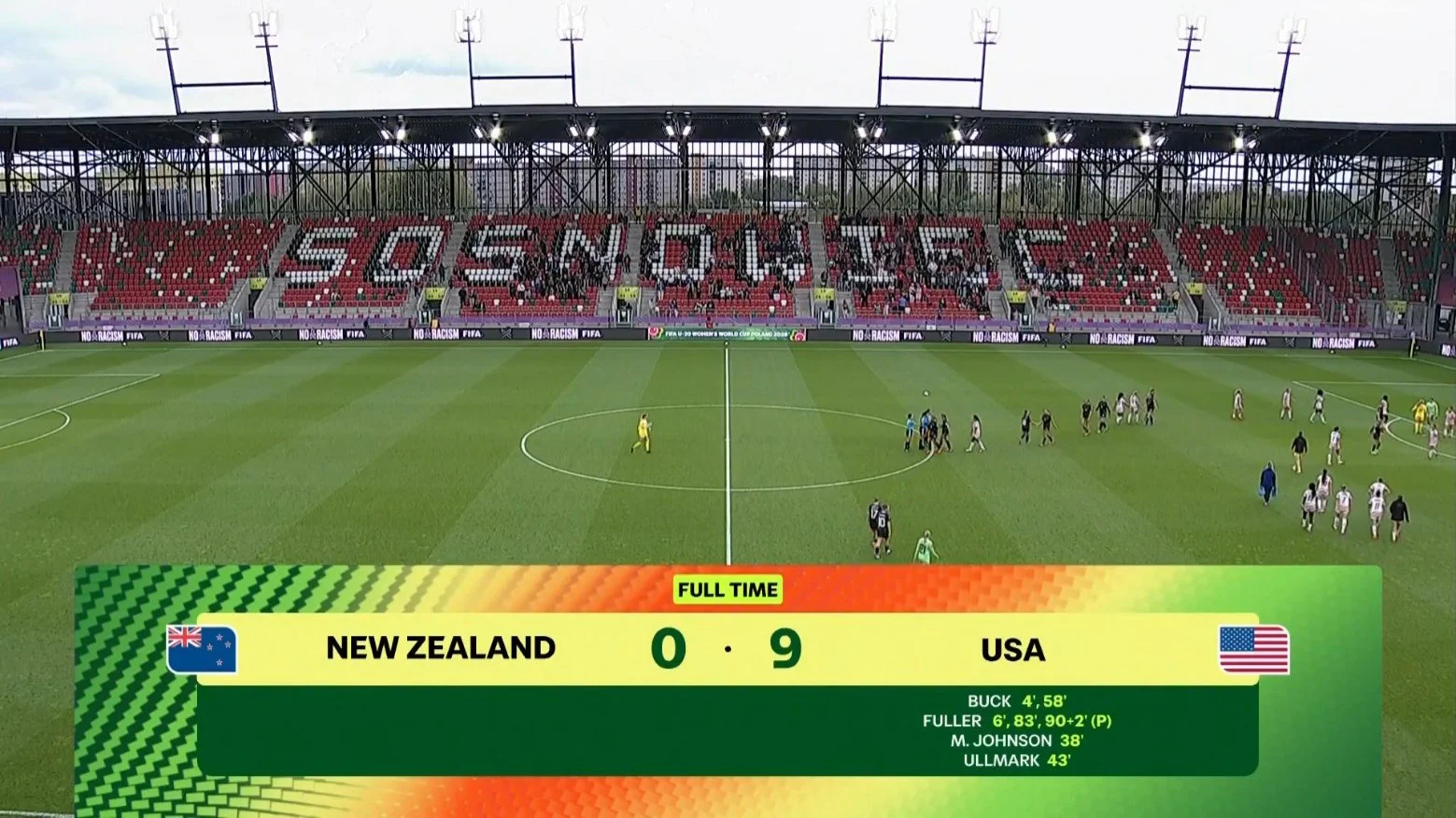
And then it finished with a loud kerplunk as the NZ U20s were beaten 9-0 by the USA in their final group fixture. A 2-2 draw between Japan and USA in the previous matchday meant that when this game began, there was still a chance that New Zealand could progress to the next round as a third-placed finisher should they grab a very unlikely win... yeah so much for that. Coach Holmes made five more changes to the starting eleven, including Pia Vlok beginning on the bench, although defender Charli Dunn was the only selection who hadn’t already made a start during the tournament so the rotations weren’t as drastic as they might appear. Just a bit of tournament rotation. And to be honest it probably didn’t matter who they picked.
Grace Duncan did make a superb sliding tackle in the box early doors... but within six minutes it was 2-0 to the Americans, whose pace and directness were too much to handle. It’s one thing to have your team stacked in good defensive shape but if oppo midfielders can simply dribble past you then it’s irrelevant – both those early goals came from driving runs into the box where defenders were easily bypassed. First goals that Aotearoa had conceded in a first half during this tournament.
Freya Des Fountain made a goal-saving block in the six yard box while Brooke Neary made a couple wicked saves as things briefly settled down, with NZ even applying a little bit of a press from the top. There was another brilliant Alyssha Eglinton slide in the area. And that’s the thing: it’s not as though they were phoning it in. The effort was there. They were organised and aggressive, especially from set pieces. But as feared, they simply could not keep up with the athleticism in that USA team.
Some of our players are strong, some of our players are fast... but all of the Americans were both of those things plus they played at a tempo that was tough to withstand. The resistance was good after those initial two goals but it was spoiled in the closing stages of the half with two more quick concessions. On came Pia Vlok and Lily Brazendale at the break, two of our better athletes, and the chance to take stock must have helped because there was another gritty phase to begin the second spell... until America’s pace in transition sliced the kiwis up again on 58’ and a sixth followed two minutes later. Then came another spell of 20-odd minutes without concession... before USA added three more in the last ten-plus-additionals.
The goals all seemed to come via three different situations:
Pace out wide beating a defender and then crossing/squaring from the byline
The USA winning the scramble for second-balls in the area
American midfielders making unchecked deep runs into the danger zone
The ninth was a penalty but the penalty was won via scenario three. So on the one hand, there were spells of genuine sturdiness and full commitment defending during this game. On the other hand, they conceded in multiples every time and were thoroughly outplayed without even being that bad. Like, there were no silly own goals here. There were no goals from defensive giveaways playing out from the back. No goalkeeping howlers. They didn’t quit and they didn’t sulk. But they still lost 9-0 and even accounting for the match-up problems against such an athletic team that does not paint a pretty picture about where New Zealand is at right now.
Stats & Reaction
It’s frustrating because the bones of something great were there in those first two games where New Zealand kept both Japan and Italy scoreless into the half-time break and seemed to have some success at limiting the quality of the chances against them, even if they didn’t do much to prevent the quantity of shots. But a 9-0 loss in the third game marks New Zealand’s worst ever defeat in a women’s age grade World Cup and means this overall campaign did nothing to (statistically) halt the downturned trend at such events. Still haven’t won a women’s youth World Cup game since the 2018 U17s in their bronze medal match.
Aotearoa at Recent Age Grade Women’s World Cups
2022 U17s: 0-0-3 | 2 GF | 10 GA (Germany, Chile, Nigeria)
2022 U20s: 0-2-1 | 3 GF | 6 GA (Colombia, Mexico, Germany)
2024 U17s: 0-1-2 | 2 GF | 9 GA (Nigeria, Ecuador, Dominican Republic)
2024 U20s: 0-0-3 | 2 GF | 13 GA (Japan, Austria, Ghana)
2025 U17s: 0-0-3 | 1 GF | 11 GA (Japan, Paraguay, Zambia)
2026 U20s: 0-0-3 | 1 GF | 14 GA (Japan, Italy, USA)
But the results alone don’t tell the full story, so what are we to make of all this? Well, we knew the draw was a shocker and that three tough defeats was always the probability. Also that this was a very young squad with a third of them having only just emerged from the U17s programme. And we knew that seemingly more pedigreed or prepared squads in the recent past have done no better so with all those things considered we can’t reasonably have expected much else.
Callum Holmes, at 30 years of age, was the youngest head coach at the event – he’s got over a decade of coaching experience so that’s not the issue. But has NZ Football become too reliant upon the A-League clubs for national team development? Chris Greenacre was coach of the last men’s U20s, hired while he was the Nix Reserves coach. It was the same deal with Holmes, although he left the Phoenix to become Director of Football at Island Bay United at the start of this year. Recent AFC vs Phoenix U17s games have been doubled up as national team trials, with guest players from outside those clubs invited along. There was a heavy Phoenix presence in this squad... which makes sense because the Nix are hoarding up the best players at this age though we do have to be careful that these things aren’t happening by default, that the A-League teams aren’t being leaned on to do all of this work, and that those outside the Nix and AFC are still getting a fair crack at selection.
There’s also a question about fitness with 7/14 goals conceded coming in the final fifteen minutes of games, including result-defining ones against Japan and Italy. Honestly though, this wasn’t about coaching (Holmes deserves credit for trying to restore some defensive grit to the programme) and if they ran out of legs or found themselves outclassed for talent, that was to be expected from a team effectively full of youth players. The best teenagers around the world are already playing professionally and you only have to look at that USA squad to see what that looks like. Half of the American U20s are already on the books of NWSL clubs, with seven of them having started games this season (many of them getting substantial minutes). We have zero NWSL players at all, let alone from the U20s range.
Now obviously we can’t expect to match America at anything quantity-related... but it does highlight something when they’re full of current pros while our best U20s players are still mostly in youth or amateur footy. Looking at this squad, we can trust that Pia Vlok, Zoe Benson, and Mikaela Bangalan will play for the Wellington Phoenix in the upcoming season. A few more, like Brooke Neary and Alyssha Eglinton, could potentially sneak into focus too. Presumably Daisy Brazendale has something up her sleeve as a free agent. But as things stand, that’s it.
The impending arrival of Auckland FC on the women’s scene will be fantastic, although keep in mind that it’ll only be expanding what we already have. Twice as many players in A-League systems... but still only in A-League systems. Having said that, it does make a difference that the Wellington Phoenix are good now. Bev Priestman knows what it takes to succeed at the top, Abby Erceg knows what it takes to succeed at the top. It’s a tough balance since youth development needs to involve patience and understanding... yet young players also need to be given the skills to take their careers further and that involves a certain hardness, determination, resilience that perhaps we’ve been undervaluing a little bit too much in some of these environments. We did see it in the first halves against Japan and Italy though.
The other factor here is the revamping of the National League next year which will move the Phoenix U20s from playing against boys’ U15s teams in Wellington to playing against the best domestic women’s teams in the country over a full season. As will Auckland FC as they debut at that level. Games where the context matters, where the results matter. Those are development teams, sure, but development means preparing them for professional careers which teaching them how to function in competitive environments where winning is the only priority. That may not be the case for U20s/Reserves sides but it will be for what follows. Players should be getting that at the Phoenix now and if Auckland FC come upon the scene with the same ambition as their men’s team did then they’ll get it there too.
It’s also feels rude not to point out that there was more good footy than bad footy over the course of these three games. If we’d lost 3-0 or something more respectable to USA then it would have been a very different story – but the sheer volume of that 9-0 loss blew things out of proportion. Wasn’t quite as bad as our confederation buddies New Caledonia though. They lost 5-0 to China, 11-0 to Spain, and 10-1 to Nigeria. Joceline Kourevi scored the goal there with about a minute left in their third game – a mint strike from distance. Very cool moment within an otherwise difficult campaign which combined with New Zealand’s results (if not entirely from their performances) doesn’t do Oceania Football any favours in the global reputations. Nevertheless, these things are development tournaments and if those players are able to harness the good stuff and learn from the bad stuff then it will have been worthwhile.
Three players played every minute: Daisy Brazendale (captain), Alyssha Eglinton (the top performer), and Brooke Neary (the goalkeeper). Pia Vlok (the best overall player) would have joined them except she was rested for the first half vs USA. Every outfielder got minutes. Another thing to consider is that six of the seven players eligible to return for the next U20 WWC in two years (Des Fountain, Bangalan, Duncan, March, Vlok, Bennett, and Holland) – all except reserve keeper Holland (likely to be the starter at the U17 World Cup in a couple months) – made two starts.
If you rate the yarns on The Niche Cache, get amongst our Patreon whanau to support the hustle
Also check out our banger Substack, shout us a beverage, whack an ad, and tell your mates about us