
2026 Rugby League World Cup: New Zealand Kiwis Preview
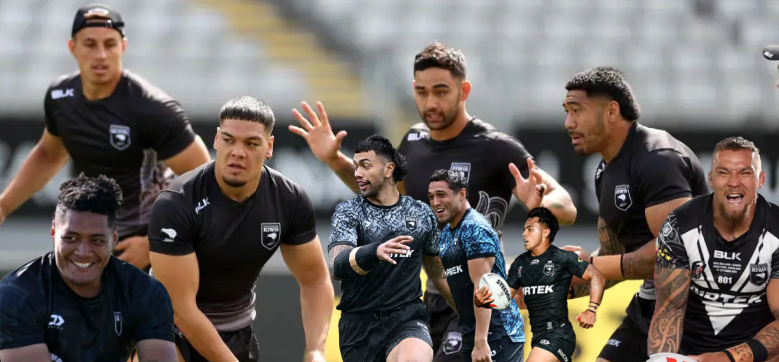
Since winning the 2008 Rugby League World Cup, Aotearoa has made the final in one of the last three tournaments and that should serve as reminder of how hard winning a World Cup can be for any nation in any sport. The 2017 World Cup was a disaster for New Zealand, not just in terms of their performance but also because all of their pool games were in Aotearoa after a period in which kiwi rugby league fans had very little connection to their national team because they didn't play much footy in their home country.
Thankfully, that disaster campaign shook things up for New Zealand Rugby League. The Kiwis didn't make the final of the 2022 World Cup after a narrow loss vs Australia in the semi-final but there have been significant improvements in Aotearoa rugby league since international footy swing back around after the pandemic.
Aside from the usual niggle against Australia, Aotearoa has thrived in the Pacific Championships era and enter this World Cup with four consecutive wins, the last three being wins over Samoa and Tonga. Australia, Samoa and Tonga have all had tours of England during this period and Aotearoa hasn't, so that's the only unknown for Kiwis in terms of performing against other World Cup contenders.
The Pacific Championships era has seen a fresh wave of Kiwis enter the mix and the emerging depth is excellent in all positions. Leo Thompson, Naufahu Whyte, Keano Kini, Erin Clark and Xavier Willison have made debuts in the Pacific Championships and are now in the World Cup squad. Fa'amanu Brown made his debut in the Pacific Championships and has since retired, while Phoenix Crossland has played six Tests in two years and would have been part of this squad if he was available.
Matthew Timoko, Griffin Neame, Will Warbrick and Jordan Riki also made Test debuts in the last three years of Pacific Championships and are not in the World Cup squad. That's an example of the depth on offer for Aotearoa and it continues this year with Jacob Laban and Tanner Stowers-Smith joining the Kiwis tier. Laban joins Joseph Tapine and Jahrome Hughes as Wellington reps in this World Cup squad and Stowers-Smith is the fourth player from the South Island to debut during the Pacific Championships after Neame, Brown and Riki.
Some notable youngsters on the rise who are likely to align with Aotearoa include...
Backs: Te Hurinui Twidle (Bears), Mason Barber (Bears), Kaawyn Patterson (Bulldogs), Haami Loza (Panthers), Adaquix-Jeramiah Watts-Luke (Dolphins), Bronson Reuben (Bulldogs), Tokoaitua Owen (Broncos)
Forwards: K-Ci Newton-Whare (CI squad - Storm), Charleston Te Rore (Roosters), Tamakaimoana Whareaorere (Knights), Marley Igasan (Broncos), Torino Jackson (Titans), Reweti Ngarimu (Cowboys)
The lack of any second tier Aotearoa team is an easy area for improvement. There was an NZ-A team in 2023 that quickly fizzled out and Junior Kiwis stopped their annual fixtures a few years ago, having been a platform for many players to then play for Samoa or Tonga. NZRL do have various junior representative activities like U16 and U18 Schools vs Clubs as well as the U19 Taurahere camp for players from Aotearoa or with Aotearoa links based in Australia.
Add in mid-year Test footy and more representative fixtures within Aotearoa for fairly simple examples of how international rugby league can grow for New Zealand. Why is State of Origin being played in New Zealand at a time when we can't even have Aotearoa teams playing some kind of games (international or exhibition) at that time?
Kiwis have always loved to watch Aussies bash each other but it seems ridiculous that folks are celebrating State of Origin being played in New Zealand when there is no mid-season Test. Progress is being made and international rugby league has dominated the October/November window during the Pacific Championships, however this is rugby league's major weakness compared to rugby union.
Kalyn Ponga and Dane Gagai continue the trend of players previously aligned with Australia switching to Aotearoa. This has been boosted by tweaks to State of Origin eligibility which was a classic case of Aussie being a bit precious, although those tweaks didn't impact Casey McLean's decision last year. McLean was born and raised in Sydney, played for New South Wales U19s and chose to represent Aotearoa before the change in eligibility rules.
Scott Sorenson is another who was born and raised in Australia but chose to play for Kiwis. At the same time, Kiwis and the Aotearoa pipeline is being flooded with youngsters who played junior footy in New Zealand and then enter various NRL systems. Timoko, Thompson, Neame, Whyte, Warbrick, Riki, Kini, Clark and Willison have all made debuts for Aotearoa during the Pacific Championships as Kiwi-NRL juniors who grew up in New Zealand.
Mana means something to Aotearoa and a hearty culture has been brewing for Kiwis since the 2017 disaster. Players of all cultures are welcomed and celebrated, while a core group will roll into their second World Cup. Coach Stacey Jones has injected plenty of emerging talent and that's only going to continue, yet he also needs reliable performers at the international level and that frames key zones in this World Cup squad.
Charnze Nicoll-Klokstad is a lower ranked member of the outside back group in this squad with over 15 Tests of experience and he's started Tests at fullback, centre and five-eighth. Perhaps there are trendier players on the radar but Nicoll-Klokstad's service to Kiwis means something when building culture and along with the versatility of Te Maire Martin and Kodi Nikorima, this players will be crucial during a World Cup campaign.
The loss of Crossland is a bummer as he has excelled for Kiwis in his six Tests, mainly as a hooker but also covering small forward and halves. The fetish for all things Warriors led to a thirst for Wayde Egan to join the Kiwis mix and that increased with Crossland's suspension as well as Brandon Smith not being available.
Martin played as a dummy half for Kiwis during the Pacific Championships last year after Jeremy Marshall-King got injured and Nikorima has been on the bench in his last four Tests, while his only start at hooker was before that four-game stretch. Given that Martin and Nikorima have both been bench utilities during Pacific Championships, they are well equipped to do that role during the World Cup as well as starting in the halves alongside Hughes.
Ponga, Kini and Clark offer versatility as well to help build out the depth for spine positions, plus Crossland could swing back into the mix if the stars align. While the absence of Crossland and Smith increased the thirst for Egan, that would have required the Kiwis selectors to pick Egan ahead of others who have been part of this journey from the last World Cup (Kiwis have Marshall-King, Crossland, Smith as their lead hookers moving forward, Martin/Nikorima as utilities and emergers like Tafua or Patterson so there's no need for continued thirst about Egan).
The quality and quantity of middle forwards could lead to more of a utility role for Clark, as well as more game time on the edge for Willison. Willison and Sorenson covered middle/edge for their respective NRL teams this season, making them useful bench players. Laban could start a game or two at edge forward as workloads are managed and he's unlikely to be carried on the bench, while Stowers-Smith will be eased into international footy as a middle forward.
Squad breakdown by role
Fullback: Kalyn Ponga, Keano Kini
Outside backs: Jamayne Isaako, Ronaldo Mulitalo, Casey McLean, Dane Gagai, Charnze Nicoll-Klokstad
Halves/hooker/utility: Jahrome Hughes, Jeremy Marshall-King, Te Maire Martin, Kodi Nikorima
Middle: Joseph Tapine, James Fisher-Harris, Moses Leota, Naufahu Whyte, Erin Clark, Leo Thompson, Tanner Stowers-Smith
Edge: Isaiah Papali'i, Briton Nikora, Jacob Laban
Versatiles: Xavier Willison, Scott Sorenson
Squad breakdown by region
Kalyn Ponga grew up in Palmerston North and has whanau connections to Parinui in Taranaki.
Northland: James Fisher-Harris
Auckland: Moses Leota, Charnze Nicoll-Klokstad, Isaiah Papali'i, Ronaldo Mulitalo, Naufahu Whyte, Keano Kini, Erin Clark
Waikato: Te Maire Martin, Xavier Willison
Bay of Plenty: Jeremy Marshall-King, Briton Nikora
Hawke's Bay: Leo Thompson
Wellington: Jahrome Hughes, Joseph Tapine, Jacob Laban
Christchurch: Kodi Nikorima, Tanner Stowers-Smith
Australia: Scott Sorenson, Casey McLean, Dane Gagai
Support independent New Zealand sports coverage by joining us on Patreon or making a donation through Buy Me A Coffee.