
How Can The All Whites Build Upon Their 2026 World Cup Efforts Moving Towards 2030?
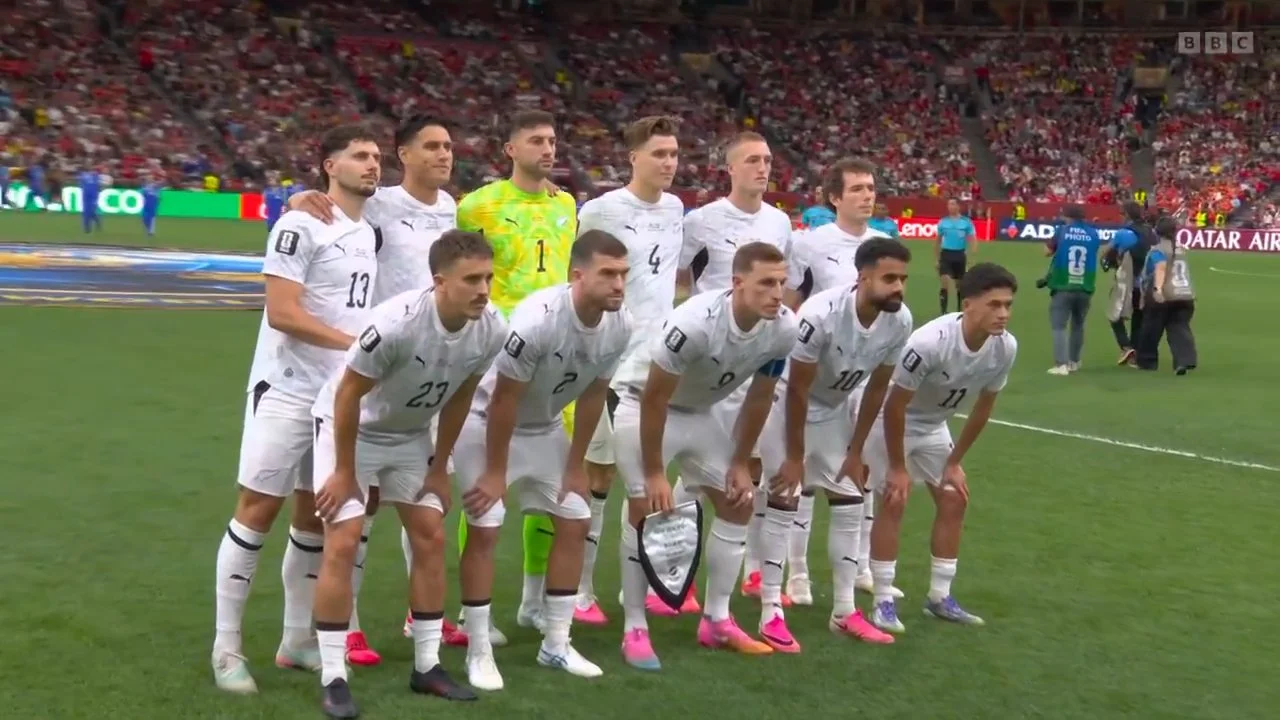
The All Whites turned up to the 2026 FIFA World Cup with two stated intentions: to win a game and to progress to the knockout stages. They did neither of those things. They twice took the lead in a 2-2 draw against Iran but couldn’t hold on, got overrun after leading at half-time against Egypt for a 3-1 loss, then were comfortably outclassed by Belgium in a 5-1 defeat to seal an early exit. That’s how it went.
It also went that the All Whites played football like we’ve never seen before at a major tournament. It wasn’t bus-parking deep blocks, it was fluid passing and quick links with heaps of running with a great tempo out of possession. New Zealand didn’t turn up to be spoilers, they were there to try go toe-to-toe with some genuinely exciting footy that led to plenty of chances and goals in every match. Admittedly there was a heavy flipside conceding 10 goals in three games, way too many to be realistic about getting out of the group (a couple teams got through conceding seven, that was the max even with third-placers advancing), albeit some of that was down to gambling for results after going behind.
That more expansive style of play is something the team has been building towards since Darren Bazeley took over. Danny Hay’s tenure ended with New Zealand failing to score a single goal in his last five games in charge, including the 1-0 defeat to Costa Rica that stopped us from qualifying for the 2022 World Cup. Bazeley eventually fell upwards into the job after some extreme silliness in the search for a new boss, going from assistant to interim to head coach, and in his first game in charge he picked a back five formation for a stuttering 0-0 draw against China in Auckland to extend that scoreless streak to six matches.
Not an auspicious beginning... but Bazeley is an accommodating bloke so when the playing group pushed for a more positive approach he was happy to oblige. They won the second game in Wellington and three-and-a-half years later here we are without ever having witness another three-CB All Whites starting line-up since. They’ve remained committed to this more aspirational style that better suits the generation of players we’re working with. We’ve still got combative centre-backs like always but zippy technicians like Eli Just, Callum McCowatt, and Sarpreet Singh are a new breed of Aotearoa footballer.
The 2010 approach was the opposite of that. It was backs-to-the-wall defence for those blokes, hoping to nick something late in the game or from set pieces. That was the most logical approach for the squad that Ricki Herbert had and it worked wonderfully to the tune of three draws. But there’s a ceiling to what you can achieve playing that way. The 2026 crew aimed for more and achieved less... yet with a crucial difference: the new 48-team World Cup format means that New Zealand are probably going to qualify again next time. It won’t be another generation before the All Whites are back, and with a relatively young core to their squad this team has the opportunity to build upon this experience into the 2030 campaign.
This is a tricky thing to digest because on the one hand, turning up as the lowest-ranked nation and scoring some goals and putting in some slick performances is probably more than most neutral viewers would have expected of us. On the other hand, the performances were good enough to suggest that the All Whites were capable of more than that. Outright disappointment lacks context. Outright positivity undersells this team’s potential. So what do we do? We take encouragement from the style and confidence but also make sure to learn from the things that went awry, treating this as a milestone in this team’s evolution and doing everything possible to ensure that this team can hit those targets next time.
Where Did The All Whites Fall Short?
Not to be all downbuzz here but the stuff that worked will take care of itself, it’s the stuff that didn’t work that needs to be brought into the light. Not the subjective things like Darren Bazeley’s tactics (which were the same throughout the entire WC cycle and were heavily player-driven anyway) or his substitutions (it’s not like we had a full bench of game-changers ready to go, our top-level depth is limited so while Baze could have been sharper with those moves on a couple occasions, it wasn’t a major factor). Instead more definite and specific things like, oh say...
Not Being Able To Hold A Lead – NZ were leading after 55 mins against both Iran and Egypt and emerged from those situations with one point. The defence wasn’t able to handle periods of sustained pressure without conceding and the attack didn’t manage to score that crucial next goal that would have really nailed it down. Interesting that a few of the players have suggested that they felt they went into their shells after going ahead and needed to keep doing what they’d been doing to get in front in the first place.
Not Being Able To Battle Through Pressure – When Egypt ramped things up after half-time, they ended up scoring three goals. When Belgium came out swinging from the start, they left with five. You’ve gotta suffer through phases like that to get underdog results at a World Cup and the All Whites couldn’t do it unscathed. It also helps to be capable of relieving the pressure. Granted, the Egypt game was awkward because the ref wasn’t calling the free kicks that could have helped the AWs regain their equilibrium (ironic given how Egypt crumbled amidst some rough calls in their knockout loss to Argentina) but that’s often how it goes and you’ve gotta be able to adapt. Sell those fouls better. Retain more possession. Score that second goal somehow. Embrace the defensive battle rather than struggling to hang on. Especially against Belgium who had been disappointing in their first two matches and absolutely needed that win... the longer it stays at 0-0, the more the heat goes upon Belgium.
Too Many Soft Goals/Defensive Lapses – The annoying thing is that they were kinda withstanding Belgium up until they conceded a ridiculous goal from a corner kick that dropped in the six yard box and then bounced off the back of Tim Payne who was marking his captain rather than watching the ball. Just an awful goal to let through, spoiling a decent twenty minutes of defensive grittiness (albeit with a very limited impressions in the other direction). There were also a couple goals across the three games that Max Crocombe could have done better with. It’s a high bar to demand of him but the fact is that the smaller nations who’ve done well at this tournament have done so featuring outrageous goalkeeping efforts. We didn’t get that. Additionally, we were vulnerable on the break a few times and shipped a couple goals from crosses that needed to be closed down sooner leading to headers that ought to have been more effectively marked/challenged. It wasn’t NZ’s inability to defend at this level, it was our inability to do so for a full ninety without lapses.
Not Enough Players Used To The Intensity – One thing you can’t criticise at all is the effort the lads showed. Huge running numbers, much of it at high speeds. Across the board too – nobody was slacking, everybody was leaving it out there for the nation. The difference is that some of our guys could play at that intensity and still produce delicious first touches and smart passing decisions (Chris Wood, Elijah Just, Marko Stamenić) and others were able to keep up but couldn’t supply the required quality on top of that. Some were swimming, others were merely staying afloat (while guys like Sarpreet Singh and Libby Cacace were on the fringes due to their lack of match fitness). It’s not hard to diagnose that the swimmers were the guys who have played elite club football (Wood in the Premier League, Stamenić’s Champions League outings, Elijah Just as one of the best players in Scotland last year). In contrast, Belgium’s entire starting eleven has played Champions League. It makes a difference.
But you know what? Those are all symptoms of a singular deeper problem which is that our team simply did not have enough big game experience. Only Chris Wood (and non-playing reserve Tommy Smith) had been to a World Cup before of the 2026 lot... and it’s hard to overstate just how much that matters. There were four WC debutant nations in 2026 and Jordan, Uzbekistan, and Curacao all went out in the group stage. Cape Verde fought through with three draws and served up an extra time thriller vs Argentina in the round of 32... but that doesn’t change the fact that those debutant nations combined for zero wins.
Add in the teams whose previous appearances were a footballing generation ago in 2010 or earlier (like New Zealand’s) – Haiti, DR Congo, Iraq, Norway, Scotland, Austria, Türkiye, Czechia, Paraguay, and South Africa being the others – and only Paraguay and Norway won a knockout game; Paraguay by penalties and Norway by the power of Erling Haaland (having the best striker in the world definitely helps overcome a lack of tournament experience). There is an obvious asterisk to this: the teams that qualify more often are better than those that don’t, that’s why they always qualify, it’s not purely an experience thing. But that lack of big game preparation was so clearly something that held the NZers down when it came time to turning performances into results.
And for us it’s not only World Cup experience that was lacking but big games in general. We don’t have Euros or Copa America or AFCON or Asia Cup or Gold Cup in between World Cup cycles like everyone else. Our confederation games are important and we turn up and do our bit for the Oceania region but they’re nowhere near challenging enough for what we’re aspiring towards. That’s fine, no shade on our OFC brothers, it simply means we need to get our big game prep in elsewhere. Problem is, all our non-OFC games are friendlies where Woodsy can’t play ninety because his Prem club is yapping away and there are always heaps of subs and often the other teams don’t take them that seriously – like when we played Poland and Norway and neither Robert Lewandowski nor Erling Haaland were involved.
Playing competitive games against good teams is what teaches you how to handle those sliding doors moments within games. That’s how you learn where your intensity has gotta be, what it means to stay focussed for ninety minutes without slipping, how minor those stumbles need to be to get punished, how to dig in your heels during difficult spells, how to play with and protect a lead... all those pesky weaknesses that we saw at this World Cup would get at least a little bit better with more competitive football. We’ve had a taste of it now. This team has genuine potential and we’ve absolutely got to go for it.
Darren Bazeley: “When you're playing against some of these world class players that are clinical and ruthless, we get punished if we're not flawless for ninety minutes. These are lessons for our players. Obviously a couple of the guys are older but the majority of this team is very young and this is really the first time they've been exposed to this type of level of ruthlessness and professionalism. They all play professional football in good leagues but we've only got Woodsy that plays in the Premier League. You come up against a Belgium team full of Premier League, Serie A, La Liga, you know, they've all played in the highest levels for a long time and been to World Cups and been to Euros and all those things. We have our Oceania qualifiers and then we play a lot of friendlies, where we're making six subs and giving everyone a go. You can't replicate what the boys have learned here. It's going to be massive for the majority of this squad for the next time.”
What Can We Do About It?
Okay, problems laid out on the table, now here are three ways to fix them...
Get some competitive games outside the Oceania confederation
More players in the best possible club environments
Ensure we’re developing the right profiles of youngsters coming through
The first point is the most difficult because where are we supposed to do about it? New Zealand might be the only nation on the planet mourning the loss of the Confederations Cup... because there’s nothing else for us now. Going back across the last decade, the only non-friendlies that we’ve played outside Oceania were at the 2017 Confeds Cup (lost 2-0 to Russia, lost 2-1 to Mexico, lost 4-0 to Portugal) and then the intercontinental playoffs against Peru in 2017 (drew 0-0 at home, lost 2-0 away) and Costa Rica in 2022 (lost 1-0 on neutral territory). And we don’t even get those any more. Sure there are FIFA Series games and Soccer Ashes and whatnot... but those are glorified friendlies. The more the merrier with them but we still need something else.
One idea that’s been floated around is Gold Cup entry. That’s the North & Central American championships, held every two years, and for the past three editions they’ve included a guest team: Qatar in 2021 and 2023, Saudi Arabia in 2025. South Korea also had a go in 2000 and 2002. Now, if it comes down to a purse bid against those countries then we’re screwed... and anyway Saudi Arabia were invited for two events so they’ve already got the next guest ticket (coincidentally, Saudi sovereign wealth fund PIF is a major Gold Cup sponsor). But they did talk about expanding it from 16 teams to 24 teams last time (with eight guests) and while that didn’t come to fruition then, the idea still lingers. The success of the expanded World Cup might nudge them further in that direction.
Naturally they’d prefer more commercially lucrative invitees but at least the All Whites (and New Zealand in general) do have a good reputation and the World Cup will have helped that. We’ve played a lot of games against CONCACAF nations in recent years (Costa Rica, Mexico, USA & Haiti all within the last five years) so existing relationships are there. We wouldn’t win a bid on capitalist criteria but from a competitive standpoint we’re a fun team that usually loses which is perfect for a guest nation. NZ Football have confirmed that they’re trying to make it happen and if we can get FIFA on our side of the lobbying then you never know.
Copa America, for the South American nations, also tends to invite guest teams. They only have 10 core members and therefore need to fill out the competition with outsiders. Usually they grab teams from CONCACAF but Japan and Qatar have also been included before. That’s another option – especially if Tim Payne makes the phone call. Doubtful we’d have any chance at getting into the Asian, African, or European tournaments since they’ve got way more competitors hence we’d be taking a spot away from one of their own constituents. There are smaller tournaments within those regions though, such as the ASEAN Cup and the Arab Cup. The least we can do is ask nicely.
There’s another (unlikely) possibility that maybe FIFA could mirror FIBA where the international basketball federation still recognises Oceania and factors them into World Cup and Olympic qualification... but since only Australia and New Zealand have competitive teams from that region they’ve otherwise been absorbed into the Asian confederation. The Tall Blacks and Tall Ferns play in the Asia Cup. They play Asian teams in World Cup qualifying. There’s no way FIFA would axe Oceania as a region, nor should we want them to, though maybe merging the Asia Cup and Oceania Nations League could be something to ponder down the line. There are better solutions though. Let’s see that Gold Cup dream come true, that’s the most realistic one (and probably the best competitive level for where we’re at).
Most of a player’s improvements happen during the day in, day out of their club football. At the moment we’ve got a squad full of solid pros but with only Chris Wood currently getting games in a top five European league and only Marko Stamenić having ever played Champions League (and even then only in the group stage). Ben Old (France) and Libby Cacace (Italy) have prior experience in those top five leagues but both got relegated which isn’t really the vibe we’re going for. Joe Bell won a Norwegian title recently, that’s pretty cool. Eli Just and Callum McCowatt had strong seasons in Scotland and Denmark respectively. Okay, sweet, we can work with this... but we need more!
The good thing is that it’s already happening. The wheels are in motion. Jesse Randall has made his move to Dundee United and Tim Payne even got a surprise one to Club Olimpia in Paraguay. It shouldn't be long until Elijah Just and Finn Surman cash in on their World Cup clout (with the backdrop of outstanding club seasons to vindicate their quality) while the likes of Callum McCowatt, Sarpreet Singh, and Matt Garbett have been rumoured with fresh moves as well. This process doesn’t have to come via new transfers either. Alex Paulsen and Tyler Bindon are already on the fringes of Premier League clubs trying to earn a shot at that level. Marko Stamenić, Liberato Cacace, and Max Crocombe are at clubs hoping to earn promotion to the Prem, going up the divisions the old fashioned way. It’s all about getting our best players in the best club environments possible.
It’s unrealistic to demand Champions League footy for all... that’s not gonna happen. Nor should we want that if the dude isn’t good enough for that level. It’s a case by case basis thing. This idea is more about raising the overall level so that in four years’ time we can pick a squad with six or seven guys in top tier leagues instead of one or two, so that our bench is stacked with European pros rather than A-League guys. No shade on the ALM which is an excellent competition and a great stepping stone for kiwi talent but it was rather obvious which guys in this squad haven’t played anywhere else yet. Plus, like, what we’re talking about here isn’t easy. It takes a fair bit of courage and an insane amount of work, not to mention sustained production over multiple seasons, to earn those kinds of moves... it’s the guys willing to gamble on their own talents that we want carrying the All Whites forward. Gotta encourage the ambition.
Finn Surman on his World Cup experience: “Umm what did I learn? I think I just learned that I can compete with players at the top of the world. There's a lot that I can get better at and that we, New Zealand, can improve on, but overall I'm pretty pleased with how things went in the tournament. I don't believe the gap's too big between both myself and the players that we played against, but also New Zealand and the countries we played against.”
And then it’s just about keeping an eye on the youth development side of things. We’re doing pretty well in those spaces. Having two A-League clubs is helping bolster the numbers and NZ Football has close connections with both Auckland FC and Wellington Phoenix. NZ age grade sides have dipped in how they’ve gone at their youth World Cups across the last couple cycles though that’s not really how you judge those things. The grassroots game is in a decent place. Next year’s National League reform ought to raise the standard there by having the best up against the best much more often. NZF’s Whole of Football 2.0 strategy is already at work.
One area of possible concern is our elite coaching pool. It’d be choice if our various national teams (men and women, senior, U20s, U17s) and professional clubs (A-League and Pro League) weren’t overwhelmingly dominated by coaches with English or Australian accents, you know? Much love to everyone who puts in the work for kiwi football, this isn’t about individuals, it’s just that it might not be a great sign of a healthy footballing culture that more locals aren’t rising into those roles. There are already signs this may be changing though.
Then there are the profiles. Because while the AWs worked extremely hard in those three games... they also got shown up athletically in a few obvious ways: lack of pace across the board, lack of power in attack beyond The Woodsman, lack of dudes who can go 1v1 against defenders. We don’t need a whole team of premier athletes but a couple more to sprinkle in there would make a huge difference. Fortunately, guys like Luke Brooke-Smith and Stipe Ukich are already on the way, strong and quick, with the potential to be ready in four years’ time. Don’t wanna put all our eggs in one or two baskets so we’ll see how things progress across the board. Making sure we continue to develop more of those zippy technicians to replenish the squad without having to revert styles is another focus. Especially since a very disproportionate amount of this squad came through the Declan Edge-era Ole Academy and that’s not been a thing for a wee while now.
The maximalist approach is the way to go: more professionals means more who make it to the top, which means more variety in the types of players that get there. There was a number bandied about during the tournament of 60 professional players from New Zealand... there’s way more than that, that’s just the number that Darren Bazeley always mentions for his long-list of All Whites candidates (which has gone up from a couple years ago when he usually claimed to be tracking around 50 players). But comparative to other countries, it’s a bloody small figure. Let’s make it so that the current number is as low as it’ll ever be again.
Another aspect is that all these ideas are interconnected. By playing at a World Cup, our best players have proved (to themselves and others) that they can hang against the world’s best, which in turn aids their transfer marketability. Making upwards transfers then helps them become more competitive at future World Cups. Getting higher quality games for the All Whites will improve the results, which makes kiwi players more enticing and accessible for clubs around the world. A stronger senior team gives young players more to aspire to, carving out room for them to make their way in the sport. Playing at a higher level increases athleticism, both from the standard of play and also the quality of training and sports science they’re exposed to. And so forth.
By the way, how much of this applies to the Football Ferns? Almost all of it... albeit with way fewer pro opportunities out there for female footballers, where even the top leagues often don’t pay particularly well. But our weaknesses right now are the same: a young-ish squad with very few players in peak club situations, a lack of top notch athletes, and not enough competitive games outside of World Cups and Olympics. The Ferns have been stuck in this spot for years, maybe even decades, being unable to solve the conundrum of being too good for Oceania and not good enough for the world.
On the positive side, the success of the Wellington Phoenix last year (and hopefully next year too) counts for plenty. The introduction of an Auckland FC women’s team can’t come soon enough, although note that AFC is already running its Talent Development Centre on the women’s side. Opportunities are growing. Kiwis are being included in the expanding professionalism of women’s footy – this year alone we’ve seen players in England, Italy, France, Netherlands, Ireland, Portugal, Mexico, Canada, Switzerland, Iceland, Denmark, Sweden, Vietnam, Austria, and Finland. The Ferns have more players to choose from than ever before... what we need is more star players in those top leagues like we used to have. There was a solid run for about 15 years where we always had at least four or five players each season across the English WSL and American NWSL (usually with a few German Bundesliga options in there too)... until last year when we had zero WSL or NWSL players. The thing that the All Whites are searching for is the thing that the Football Ferns have lost.
The other hiccup here is that while the All Whites can plot a four-year plan... the Women’s World Cup is only twelve months away. New Zealand did win a game, as co-hosts, at the last World Cup with that legendary 1-0 victory against Norway. But they fell short of the knockouts and then didn’t do much with a tough draw at the subsequent Olympic Games. Have the Football Ferns spent the last three years seeking to learn the lessons of that 2023 World Cup to best prepare them for the next one? Hmm... not convinced. Twelve months out and the coach is still talking about building out squad depth while we continue to struggle to score goals and get decent results against top-40 ranked opponents. This will be a crucial transfer window with the likes of Kate Taylor, Katie Bowen, and Indi Riley looking for new clubs. Might have to be that, with a rebuilt and relatively inexperienced squad, we treat this as a five-year project for the Ferns which brings them back in alignment with the All Whites, given that the same three objectives apply: more competitive games, more top level pros, big emphasis on player development.
The Niche Cache is fully independent and dedicated to kiwi sports so if you rate what we do, please help us out on Patreon, Substack, or Buy Me A Coffee
Also helps to whack an ad, tell your mates about us, and also try do a bit of all that likes, comments, shares stuff for those pesky algorithms