
A Casual's Guide To New Zealand Warriors Optimism For The 2026 NRL Season
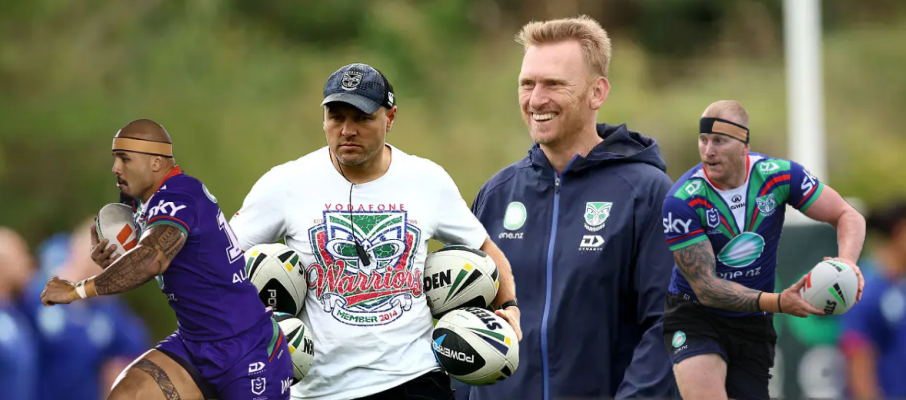
New Zealand Warriors are preparing for their fourth season of the two Andys era with Andrew Webster chasing another finals campaign as coach and Andrew McFadden's mahi in the development system continuing to impress. They are part of an organisation that is thriving at all levels and it's undeniable that NZW is the coolest sports franchise in Aotearoa, with enticing tentacles stretching across the ditch.
The Warriors of Aotearoa are doing things that fans have always wanted and things that critics always highlighted as issues of previous regimes. This is the first major checkpoint on the guiding path of casual Warriors fandom as reputations from a previous era have been blasted away and there are lots of sensible moves being made that set the tone for optimism.
Rugby league is booming in Christchurch and throughout Aotearoa's regions. NZW are leading Christchurch wave and that starts with their connection to the community. NZW consistently get bigger crowds than any Super Rugby games in Aotearoa and that applies for Christchurch where NZW crowds were far more vibrant than Canterbury's home crowds, which will soon be amplified when NZW play at the new stadium in Christchurch.
NZW have players from the Canterbury region throughout their system. Tanner Stowers-Smith (Halswell) made his debut last season and at 21-years-old he averaged 30 minutes in his first 13 games of NRL footy. Jason Salalilo (Papanui) and Makaia Tafua (Linwood) played plenty of NSW Cup footy last year while eligible for the Under 21s team, which sets them up for key roles this season and one of them may sneak into an NRL debut if the stars aligned.
One of the best rugby league prospects on either side of the Tasman is from Christchurch in Hornby junior Bishop Neal, who was the 2025 Harold Matthews Cup (U17) Grand Final MVP. NZW have won their first two seasons of U17 footy in the New South Wales Rugby League competition and another Christchurch junior in Lennox Tuiloma (Linwood) won the GF MVP award in 2024.
This flows throughout their U17/U19 squads for the junior representative season starting next weekend and the regional funk for those squads was mapped out here. Not only are NZW on top of rugby league's explosion in the south, McFadden has recruited a bunch of young players from Australia and NZW have established a base in Logan that is as good a rugby league area as any other in Australia.
NZW also draw monster crowds in Australia and a dirty secret of the NRL is how most Aussie teams benefit from bigger crowds when they host NZW. Christchurch and Australia offered some of the most vibrant NZW crowds last season and along with Mt Smart, they all have a different flavour with different chants used in Australia and Christchurch than what is heard at Mt Smart. All of which is evident in how NZW had the same 7-5 record in home and away games last season.
Aside from Brandon Norris who joined NZW from Northern Territory and has played wing/centre for the U21s team, most of the young Aussies are halves. This is another indication of sensible moves being made as McFadden identified the need for Aussie play-makers and he hasn't just recruited blokes like Tanah Boyd to bolster depth for the NRL squad, young Aussie halves have joined NZW at the U17, U19 and U21 level.
Interestingly, these halves come from heartland areas of rugby league in Australia and offer another example of why Australia's old school ideals of 'catchment areas' and 'local nurseries' are nothing more than ancient myths. Jack Thompson (Cessnock) has been in the Mt Smart system for two years and won an U17 championship, now he's joined by another Newcastle junior in Jye Linnane (Kurri Kurri).
Along with two halves from the Newcastle area, NZW have Luke Hanson (Asquith) and Jett Cleary (Penrith Brothers) who are from the Penrith area. There are plenty of Aotearoa halves throughout the NZW system and a major theme throughout the Mt Smart system is competitive depth, which is evident in the halves cluster as all halves need to playing near their best to command selection.
Zoning in on the Aussie halves and there should be no concerns about depth when it's easy to list three tiers of Aussie halves at Mt Smart right now...
Tahi: Luke Metcalf, Tanah Boyd
Rua: Jett Cleary, Luke Hanson
Toru: Jack Thompson, Jye Linnane
Add in Aotearoa halves Chanel Harris-Tavita and Te Maire Martin for four halves around the NRL level, offering a glimpse into the depth built by McFadden and available to coach Webster. No one should be tripping about depth for NZW as they have a squad that can absorb the (too long) long and brutal NRL season.
NZW have back ups for every position with NRL experience, but NZW depth also depends on having players who can cover multiple positions and almost half of the top-20 has already played multiple positions at the NRL level for NZW. Beyond that, the system built by Webster and McFadden ensures that styles and skills are thread throughout the grades for NZW so any player stepping up to the NRL team has experienced playing Warriors footy.
Behind Wayde Egan is Samuel Healey in the dummy half slot. There are two halves experienced halves sitting behind the Metcalf/Harris-Tavita staring combo. The outside back group offers the best example for NZW depth though.
There are two NRL fullbacks at Mt Smart in Charnze Nicoll-Klokstad and Taine Tuapiki who can share starting duties. Despite many folks still chatting about Roger Tuivasa-Sheck as the NZW fullback, coach Webster has consistently rolled with Nicoll-Klokstad and Tuaupiki as his best fullbacks. However, Tuivasa-Sheck is the ideal player to have covering that position mid-game and these mid-game tweaks are just as important, if not more important than week to week changes.
The arrival of Alofiana Khan-Pereira means there are three NRL calibre wingers, which is the same at centre with Adam Pompey, Ali Leiataua and Rocco Berry. There is no need to stress about the fourth specialist in these positions because no NRL team has a solid NRL professional as their fourth winger or centre and NZW have others who can change positions to add depth to a different role.
Nicoll-Klokstad (centre), Tuaupiki (wing), Tuivasa-Sheck (fullback) and Adam Pompey (wing) are four examples of outside backs who have can play at least two positions to an NRL standard. Harris-Tavita and Martin can cover multiple positions outside of their primary play-making roles, while most of the forward pack can play both middle and edge with a few lads capable of plugging holes at centre.
Mitchell Barnett, Kurt Capewell, Marata Niukore, Jackson Ford, Leka Halasima, Jacob Laban and Eddie Ieremia-Toeava have all played multiple positions for NZW at the NRL level. This doesn't include James Fisher-Harris who started as an edge forward at Panthers and Erin Clark who started as a hooker in his first stint at NZW.
New recruit Morgan Gannon fits this profile as well. He's mainly an edge forward but coach Webster will be working on his distribution mahi in the middle to built out that skillset. Under the guidance of McFadden, NZW recruit specific players who fit the style and offer something NZW need. Gannon is the type of forward NZW want and he has a splash of experience to balance out the emerging forwards.
Khan-Pereira adds speed and McFadden has steadily added relative speed to the squad each year. Metcalf added speed to the halves when he's played, while Clark is one of the fastest middle forwards in the NRL and along with more Tuaupiki game time, this gave NZW a much faster team in 2025 than their previous years. While he needs to command selection through hard mahi, Khan-Pereira increases the speed in the squad and this flows deeper with Linnane also being recruited as a swift half.
Another new recruit Haizyn Mellars is part of the outside back depth and while NZW have so many options that they probably won't need to explore this depth, Mellars leads a super funky group of outside backs. Daeon Amituanai, Sio Kali, Caelys Putoko, Motu Pasikala and Norris could form the outside back unit for a NSW Cup team that will probably be full of exciting young talent.
There is a winning expectation at Mt Smart and this is something NZW folks haven't experienced before. This stems from what has already happened during the two Andys, so any negative vibes come from the individual's stinky perspective instead of the evidence presented by NZW.
Under coach Webster, NZW have played finals footy in two of the three seasons. Daniel Anderson and Ivan Cleary are the only other NZW coaches who have made the finals in at least two seasons, add in Stephen Kearney are the only coaches who have had three or more seasons in charge of NZW.
During this period, NZW have had a top-four NSW Cup team in all three seasons, culiminating in the NSW Cup/State Championship double last year. NZW also won back to back Harold Matthews Cup championships, as well as returning to NRLW and laying foundations for sneaky buzz about their 2026 NRLW potential.
There are too many variables in the lower grades to expect finals footy but heading into 2026, both the NRL and NRLW teams for NZW have expectations to make finals. Given that Shaun Johnson only played two seasons of finals footy prior to 2023 and that most NZW teams have missed NRL finals footy through their existence, a baseline expectation of finals footy should not be taken for granted.
Last season, NZW lost Barnett and Metcalf to season-ending injuries. Barnett is one of two elite middle forwards at NZW and Metcalf is the starting halfback, so not having these two should have been a devastating blow to the NZW season. Other teams would have crumbled after losing their halfback, let alone also losing a representative forward as well.
NZW didn't crumble, they stayed steady and played finals footy. They dipped a few spots on the ladder but the reality of how they absorbed those injuries differs to the perception, or what people thought would happen when losing two key players for the rest of the season. NZW were third after round 13 when Barnett got injured and fourth after Metcalf's injury in round 17, then they finished sixth and maintained winning record to finish the season.
Those injuries definitely impacted the NZW season as they would for any NRL team, but NZW didn't crumble. This showcases their mana as well as the depth that helped them stay in the finals mix and there were other long-term injuries to players like Laban and Berry that NZW had to endure. Not only did NZW stay in the top-six, they laid foundations for the future while staying in finals with Stowers-Smith and Ieremia-Toeava each playing 35+ minutes in the last three games of the regular season.
NZW didn't crumble because coach Webster has established a marker for competitive rugby league with high completion rates. Critics, fans and haters can point to plenty of statistics and observations as to negative indicators about NZW footy but the thread of high completion rates means that NZW are always in the battle and more consistent than they have ever been.
This is less about how the connection between completion rates and winning, more about how coach Webster has established a standard that has rarely been seen before at Mt Smart. NZW have been first and second for completion rates in the last two seasons and these are the only years that NZW have been over 80% since at least 2013.
Less offloads usually means higher completion rate and that connection is clearly mapped out below. The key thing for coach Webster has been how he has made small increases in offloads per game while having higher completion rates and this goes against all assumptions about how NZW play footy, while offering foundation blocks for winning mahi.
Here is a quick history of NZW completion rates going back as far as NRL.com allows...
2013: 72% | 11.4 (offloads per game)
2014: 74% | 9.4
2015: 73% | 11
2016: 75% | 8.5
2017: 80% | 7.5
2018: 78% | 12.7
2019: 78% | 11.9
2020: 80% | 10.7
2021: 78% | 11
2022: 77% | 6.5
2023: 79% | 7.3
2024: 82% | 7.4
2025: 81% | 7.7
This is the fourth season of the two Andys era so fundamentals are being stacked on top of each other with each season. There are signs that coach Webster's style of footy has become habit and this includes skills such as passing which are bein developed each summer, as all players are required to pass in attacking shapes.
Young forwards have had four summers of sharpening their passing skills, as well as developing their wrestling skills under the guidance of Kai Kara-France and City Kickboxing. Wrestling is as important a skill as any other in NRL footy and someone like Demitric Vaimauga has gone from minimal grappling as a junior, to four summers developing wrestling that is designed for rugby league.
Add in the many sessions practicing passing skills (both directions, in the bread-basket, passing under pressure) and fundamentals of NZW footy have now been stacked up over multiple seasons for someone like Vaimauga. This applies for all youngsters in the NZW system but also older players who are attracted to Mt Smart because they know they will get better as players in an NZW system that revolves around development for all.
One last layer of optimism is the crossover between rugby league and rugby union. NZW themselves have celebrated the rugby union backgrounds of their players and they consistently list schools not rugby league clubs when announcing squads. That's funny because many of these players play both codes and more than half of all Kiwi-NRL juniors in Australia played 1st 15 rugby union.
Whenever an individual joins an NRL system from 1st 15 rugby, it's described as some kind of monumental moment but it's far from unique when most juniors entering NRL systems played 1st 15 rugby. One notable example is in the NZW system with Neal who has commanded buzz thanks to his exploits in rugby league with Hornby, Canterbury RL and St Thomas of Canterbury College.
Neal was also playing 1st 15 for STOCC last year. This applies to NZW optimism because many, if not most of the juniors at Mt Smart are involved in high performance rugby union and while there is significant progress being made in high performance junior rugby league, it's not at the 1st 15 level yet.
This is part of the competitive depth building at NZW. There is a wide mix of skills and high performance habits coming from all sorts of backgrounds, which is evident in how NZW have Aussie halves as well as someone like Harry Inch coming fresh from rugby union. Put those players in a system that has a proven record of player development and there should only be excitement about the NZW pipeline.
The NZW pipeline that is simmering away below the NRL tier. Based on what has already happened during the two Andys era, fans should expect another winning season for NZW and given how everything else is building for NZW, they are on track to become one of the most impressive organisations in rugby league.
Support our rugby league coverage by joining the Patreon whanau or donate through Buy Me A Coffee. A little goes a long way to fund our mahi. Smash an ad.
Peace and love.